How was the "online celebrity" in Beijing Hutong tempered when it was beautiful? The operation of social forces improves efficiency
On a bright Saturday, the Jingshan Civic Cultural Center came alive again after the United States.
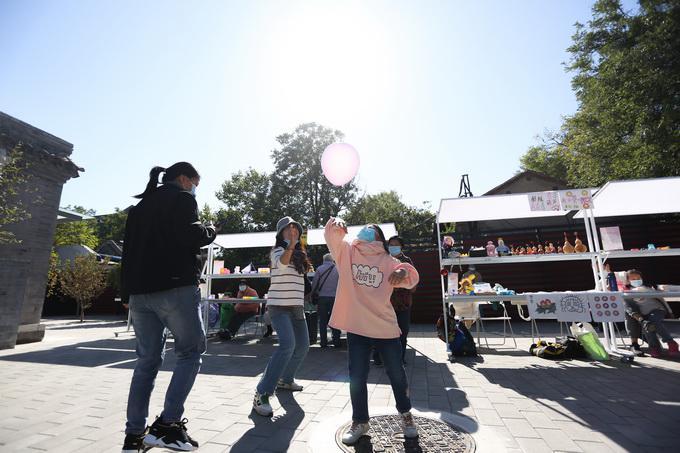
After 1995, young people played with hand-held discs and watched talk shows, while old people experienced Qin tea and handcrafted buckles, while children and parents performed a different life in the drama open day.
In the quadrangle with blue bricks and gray tiles, I met the new culture of fashion trends. Since its opening in September 2020, the largest civic activity space in the old city has handed over eye-catching transcripts-1,098 events have been held one after another, benefiting more than 60,000 people.
As the latest practice of the socialization of public cultural services in Dongcheng District, after the United States, through the professional management mode led by the government and operated by social forces, the supply of public cultural services at the grassroots level was accurate and diversified, and citizens started a new cultural life in quadrangles.
Multiple supply links all ages
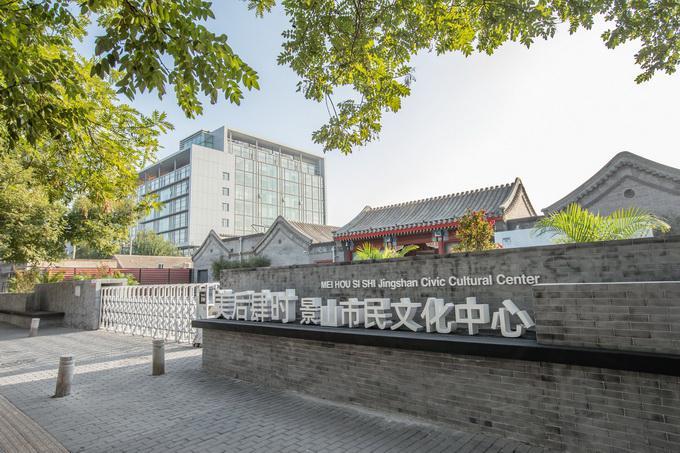
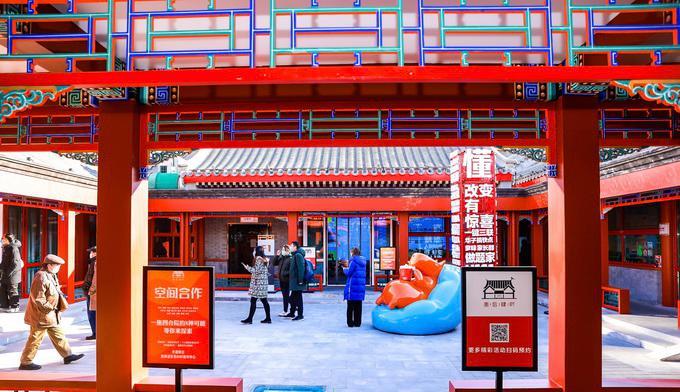
In the quaint backstreet to the north of China Art Museum, the white and fashionable logo of "Jingshan Civic Cultural Center in the Four Seasons after the United States" is quite eye-catching.
When the United States is beautiful, it means "the four seasons are renewed, the four seasons change, and the beauty will never stop." Inside the red lacquer gate, the two courtyards are antique, and the Chinese buildings with blue bricks and gray tiles are connected by cloisters, with carved beams and painted buildings full of Beijing flavor. Here, there are one ground floor and three underground floors, covering an area of 5,400 square meters. It is open from 9 am to 9 pm every day and does not close for 365 days without special circumstances. Turn around everywhere, and 21 activity spaces, such as the American Theater, the American Studio, the Food Hall, the American Reading Hall, the American Film Hall, the American Clothing Hall, the Body Building Hall and the Beautiful Exchange Center, are in good order.
At 10 o’clock every Sunday morning, the 65-year-old Yang Guangyi, who lives in Dongsi Liutiao, can’t move here. In the Art Gallery, his favorite director Xin Li walked from behind the scenes to the stage to give a lecture on old Beijing images, which fascinated Yang Lao and many hutong lovers. "Teacher Xin Li talked about Di ‘anmen Street, Bell and Drum Tower from Qianmen Street and Zhengyangmen, and then to our Dongsi. There are old photos, old images and historical materials, which is simply a’ cultural gluttony’ for me!" Yang Guangyi said with joy that the small notebook in his hand is full of lecture notes.
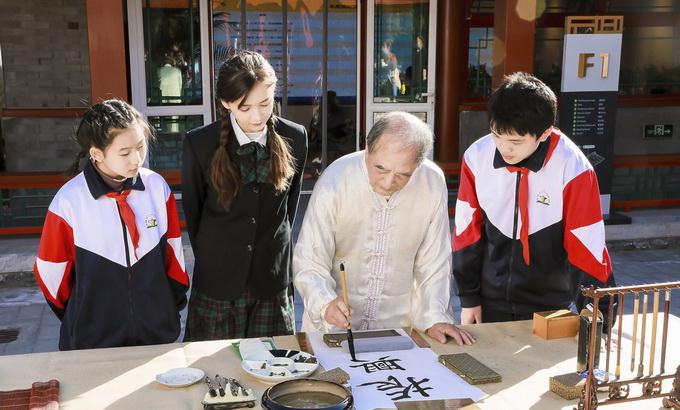
Like Yang Guangyi, the elders who love traditional culture can find "good hearts" here: Chinese studies, Qin tea, non-legacy flowers, flower arranging, singing and dancing … any choice, infinite excitement.
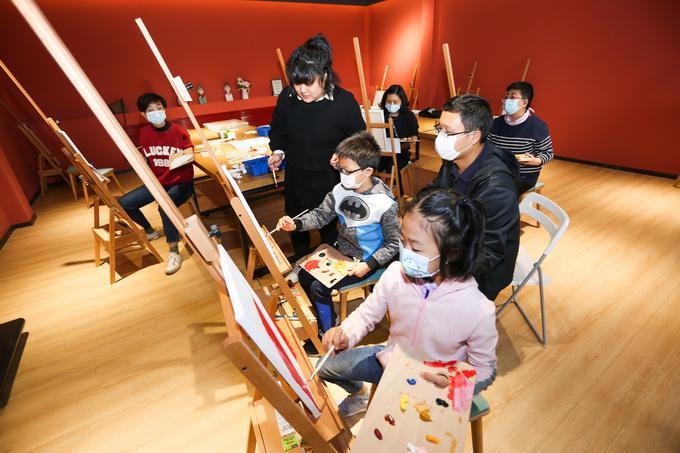
Traditional culture has made the United States gain older fans, and talk show, cultural creation, modern drama, costume aesthetics, Pilates and other trendy games have given new vitality to generate here.
After dinner on Wednesday, Zeng Jun, a post-90s generation who lives in Dongzhimen, came to Housi. In the body building, Zeng Jun changed his equipment, punched, kicked and swung, his eyes were firm and his actions were decisive. In the intense and dynamic music, he released his strength and relaxed his body and mind. In the beautiful studio next door, my lover took Didi, a 5-year-old child, to attend the zebra drama open day. "Little friends, I will keep the secret of the king of the forest, and at the moment, I have to be leaving now. Ah ah ….. "Didi, dressed as a fox, said his lines in a sly tone, and ran away with his tail between his legs, which made the audience laugh. In this weekly drama stage, teachers set up situations, and children and parents write their own lines and body language to promote the plot, which is sometimes absurd and sometimes touching. "I feel that my introverted personality has suddenly become lively, and I can dream of coming to drama classes in my dreams." Didi blurted out the charm here.
You don’t have to take out the whole time specially, and you don’t have to drive all the way to the business circle. The opening up of the United States after four hours allows office workers like Zeng Jun to have a good cultural experience in the fragmented time after work. "In the past, the public cultural space of the street was closed at five or six in the afternoon, and our office families could hardly participate. Now the United States is open at night and weekends, and the family will lift their feet, each learning and having fun. " Zeng Jun praised.
From children to elderly people, from residents in the old city to urban white-collar workers, the United States has provided high-quality and diversified cultural services to link up the widest audience of all ages and types.
The operation of social forces improves efficiency
Behind the abundant and exquisite cultural supply after the United States, Dongcheng District’s comprehensive innovation in public cultural service system and mechanism.
Meihuashi is located in Jingshan Street, Dongcheng District. It was originally used for the shield project of Metro Line 8. After the project was vacated in 2019, how to use this precious area with four floors and more than 5,400 square meters has become an important research topic of Jingshan Street.
"Jingshan Street is next to the Forbidden City and Jingshan. It is a treasure to have such a piece of land. We must use good steel on the blade." Shen Nan, deputy director of Jingshan Street Community Service Center, said that the public cultural function of darning the old city has become the common demand of the vast majority of residents through public surveys in the early stage. Therefore, Jingshan Street transformed it into a street-level large-scale public cultural service center, based on Jingshan and serving the whole city. However, in terms of operation, we should explore mechanism innovation and take the road of high quality development.
In May 2020, the Guiding Opinions on Socialized Operation of Public Service Facilities in Dongcheng District was issued, which clarified in detail the service standards, procedures for determining the third party subject, fund guarantee, performance management and other aspects of socialized public cultural services, and provided norms and standards for the four-hour operation in the United States.
According to this guidance, Dongcheng District selects high-quality third-party companies for operation through public bidding by means of government purchasing services and allocation of district financial funds. Through layer-by-layer selection, they turned their attention to the excellent and time team that has been deeply involved in cultural services in the core city for many years. With the aim of "redefining the cultural life of the city", Youhe Time has been operating the Jiaolou Library in Dongcheng District for many years, and has created a number of cultural IPS such as "Non-legacy 52 Days" and "corner map night reading", forming a perfect professional operation service system, which is very popular among the residents of the old city.
"In line with the goal of’ building the beautiful afterlife into a national aesthetic education platform with diversity, scene and cultural connotation’, we have established a life-cycle operation service from space design, space operation and brand building." The head of Youhe Time Team said.
What he calls life cycle operation service, if citizens come here to experience it, they can appreciate the beautiful feelings brought by this service. First of all, it is the most intuitive sensory experience. In the quadrangle with Beijing charm and Beijing flavor, there are modern and fashionable activity spaces: floor-to-ceiling glass, Mo Landi colors, sculpture ornaments, high chairs … No matter reading, attending classes or practicing yoga, they are relaxed and comfortable.
When you get involved, you get a sense of gain from the body to the heart. 21 activity spaces, subdivided into 21 service functions, and more than 100 cultural institutions and 200 cultural lecturers signed up to settle in. There are not only traditional cultural representatives such as Cai Zhiwei, a disciple of "Rongniao Zhang", Sun Ying, a special lecturer of Rong Baozhai’s silk enamel, and Ma Li ‘aonan, a senior teacher of Mongolian dance, but also emerging cultural groups and lecturers such as Lailu Buming Light Music Troupe, Shan Liren Talk Show, Yuan Ding, the founder of "10%" coffee, and Sidi, a jewelry designer.
The high quality and diversity of lecturers provide accurate and diversified cultural services. "Unlike ordinary grassroots cultural centers, which only meet basic public cultural services, since its opening in September last year, the United States has provided free basic cultural services such as exhibitions, lectures, cultural performances and digital film screenings, as well as extended cultural services such as yoga, free fighting, hand-playing, and drama performances, which accounted for 33% of the total number of activities in the year." The relevant person in charge said that the prices of these extended services are generally from 15 yuan to 35 yuan, and the price of a cup of coffee can buy a high-quality cultural life for one or two hours, which is a good choice.
How effective the service is, the audience has voted with their feet. According to big data statistics, more than 95% of the 1098 events held in the United States last year were full, with more than 1300 feedback messages from the audience, with a satisfaction rate of 98.3%.
Content community feeds back community.
A dazzling array of cultural activities make the United States attract countless powders from time to time, but its charm goes far beyond this. "The cultural service here is not an assembly line or a fast-moving consumer product. It is like drinking a cup of coffee and leaving. Instead, it uses activities as a medium to guide people to deeply link with each other and form a strong content community." The person in charge of Youhe Time said.
After three weeks of continuous classes in zebra drama, white-collar Anning obviously felt the change of parent-child relationship. "I am usually busy at work and have no time to accompany my son. The drama class has given me a rare parent-child time with him." Anning said that Lili didn’t dare to talk when she first came, but now, she can open her heart and perform with herself, which makes her surprised and gratified. Thanks to this cultural experience, Anning and several parents jointly set up a "parent-child relationship support group" to share mutual help with more families.
The story of educating people and feeding back personal growth and family relationships is not limited to tranquility. Through the Siheyuan Single Youth Day, Chao Huang and Xinxin, who were strangers after 1995, became lovers; By participating in antique activities such as Qin tea, Zhang Dajie, who lives in Yuqun Hutong, deeply fell in love with Mei Housi, signed up as a volunteer worker, and encouraged her neighbors and friends to participate, constantly expanding her "antique circle".
Focusing on the beauty of the future, cultural resources are still radiating outward in a silent way, extending to the surrounding hutongs, streets and communities, and promoting the formation of a harmonious community ecology.
At the "Community Neighborhood Festival" held on October 17 last year, a series of unique neighborhood festival theme activities enabled dozens of families from Jingshan Street to establish a friendly "circle of friends". In the activity of "Little Ghost in Charge, Bringing Children to Set up a Stall", children put out their idle toys, books, magazines, clothes and other items to barter things, and you came to me to find like-minded friends; In the activity of "Jingshan Life Home Neighborhood Toast a Cup of Tea", neighbors who are familiar with each other usually sit in a circle, offering each other a cup of tea and saying hello; In the activity of "Old Neighborhood Old Beijing Hidden in Old Objects", I looked at an old celadon bowl and remembered a bowl of hot jiaozi that I gave to my neighbor when I was young. The warm and long-lasting neighborhood feelings in my memory came to my mind … "I was pleasantly surprised to find that the most interesting little friend lived opposite, and the friend I could talk to was around." A resident who participated in the neighborhood festival said.
What makes us happy is that the audience walked out of the activity space and walked into the hutong and the old city, offering suggestions and suggestions for community co-construction, co-governance and sharing. After listening to the special class of "Those Things in Old Beijing Hutong" brought by Zhang Zhiyong, Chairman of Dongcheng District Federation of Literary and Art Circles, a veteran hutong fan and white-collar Xiaoqing met with the audience, and together they went into the nearby Dongsi historical relics protection essence area to learn about the old city protection and hutong culture. There, she also got to know the cultural relics protection volunteer team spontaneously organized by Dongsi residents, and signed up voluntarily to contribute to cultural relics protection.
"Openness, co-construction and co-creation" is the philosophy and purpose of the United States. This is a cultural space, and it is not limited to the cultural space. After the beauty, it is still exploring a new future.
Generate’s New Vitality in Cultural Space
As the core area, Dongcheng District has profound historical background and rich cultural resources, and is the main bearing area of the national cultural center function.
On the land of 41.84 square kilometers, there are many historical and cultural relics such as the Forbidden City, the Temple of Heaven, the Ditan, the Confucius Temple and the imperial academy, and there are 64 museums and theaters such as the National Museum of China, China Children’s Art Theatre, Sanlian Bookstore and Beijing People’s Art Theatre. It can be said that culture is the biggest feature of Dongcheng and the most precious wealth.
How to use such abundant cultural resources to serve the citizens has been a topic that Dongcheng District has been deeply cultivating for many years. Since 2014, Dongcheng has started to explore the supply-side reform in the cultural field, focusing on the three steps of "is there, is it enough, and is it good", and has promoted the socialization of public cultural services to the stage of 1.0 and 2.0, and now it has reached the stage of 3.0.
There are 17 streets all over Dongcheng District, and each street has a community service center, with rehearsal halls, conference rooms, reading rooms, electronic reading spaces and so on. It is a common place for community residents to sing, practice dancing, read books and read newspapers. In 2014, Dongcheng District was equipped with community cultural organizers through job purchase to serve the residents full-time.
However, with the personalized and diversified development of people’s spiritual and cultural needs, the standardized and standardized cultural services provided by the government have been difficult to meet the public’s needs. This requires a fundamental change from "government-run" to "government-managed" mode to further promote the socialization of public cultural services.
"The so-called socialization of public cultural services is to attract the participation of all social forces and form a pattern in which the government, market and society participate together. The essence is to strengthen content, improve quality, and ultimately enhance the people’s sense of cultural acquisition. " The relevant person in charge of the Dongcheng District Cultural Tourism Bureau said. Therefore, since 2016, Dongcheng has tried to introduce social forces, let professionals do professional things, and fundamentally solve the bottleneck of low professionalism, few service forms and low grade level. The 2.0 era has started.
In the past two or three years, a number of high-quality grassroots public cultural spaces in generate have been full of vitality: in the turret library with the characteristics of "the most Beijing", national non-genetic inheritors and post-90 s anchors talked about ingenuity and art together, and "52 Days of Non-legacy" became a well-known IP in the non-legacy circle; In the 27th Courtyard of Neiwufu Street, Hutong Aunt and foreign guys exchange identities and role-play, where new and old cultures coexist.
The early test of water has achieved results, and the supporting policies have kept up accordingly. Since 2018, Dongcheng District has continued to focus on the institutional construction of public cultural services, and gradually moved towards version 3.0. In May last year, it issued the "Guiding Opinions on Socialized Operation of Public Service Facilities in Dongcheng District".
Therefore, the United States came into being. Breaking through the original policy of "reporting once a year and inviting bids once a year" in financial procurement, Jingshan Street signed a three-year contract with Youhe Time Team, and set standards for the total amount of activities, audience satisfaction rate and number of participants, and assessed them once a year, so that citizens can effectively gain a sense of cultural acquisition.
Not only after the United States, in the past two years, emerging urban public cultural spaces such as Dongsi Hutong Museum, Gengdu Club and Yuanqing Bookstore have all become high-quality cultural habitats around citizens.
"Different from the previous two stages, the 3.0 stage reshaped the public cultural space, including not only public cultural services provided free of charge, but also various extended services provided at preferential rates. Cultural complexes are gradually taking shape and cultural vitality is unprecedented." The relevant person in charge of the Dongcheng District Cultural Tourism Bureau said.
The exploration of Dongcheng doesn’t stop there. Next, we will promote the post-American experience, and 17 streets in the whole district will realize the socialized operation of public cultural space in stages, so that citizens can feel the beauty of cultural infiltration at their doorsteps and let "Cultural Dongcheng" add color to the cultural life of the capital.
Expert interview
Professor Qi Shuyu, Department of Literature and History, Party School of the Central Committee of the Communist Party of China (National School of Administration)
Q: Compared with the traditional public cultural service operation mode, what are the advantages of this public cultural service mode of government purchasing services and social forces operating in the United States?
A: The advantages are mainly reflected in three aspects. First of all, the efficiency of the use of financial funds has been improved. Traditional public cultural facilities are usually operated by institutions directly under the government. Financial funds should not only support project operation, but also support people, so the use efficiency is not high. Taking the way that the government purchases services and is operated by social organizations saves the cost of raising people, and the limited financial funds are all used to purchase services.
Secondly, it has improved public satisfaction. The cultural needs of grassroots people have both normalized needs and dynamic needs. Compared with the traditional public cultural service operating institutions, the operating mechanism of social forces is more flexible, and it is more timely and swift to respond to the dynamic needs of the public, which is helpful to improve the efficiency of public cultural services and increase the public’s sense of cultural acquisition.
Thirdly, a competitive mechanism for socialization of public cultural services has been formed. The socialization of public cultural services attaches great importance to the introduction of competition mechanism, and which institution has the strength and experience to better meet the public cultural needs will be responsible for its operation. Through public bidding, the experienced Youhe Time Operation Team serves as the operator of the United States, and the government strengthens supervision through regular assessment. This mechanism not only enhances the endogenous motivation of the operation team, but also stimulates the enthusiasm of other social institutions to participate in public cultural services.
Q: How can this model develop sustainably?
A: The Decision of the Third Plenary Session of the 18th CPC Central Committee clearly stated that it is necessary to promote the socialized development of public cultural services. Some cities such as Beijing, Shanghai and Shenzhen have many successful practices in this regard. The practice of the United States in the last four years is exploration and innovation, which sets a benchmark for the socialization of public cultural services in Beijing and is commendable.
To achieve sustainable development, first, we should attach importance to cultivating and encouraging more social forces to participate in the socialization of public cultural services. At present, local governments generally realize the advantages of socialization of public cultural services and hope to introduce social institutions to participate, but there are not many qualified social institutions.
The second is to enhance the self-hematopoietic capacity of socialized operating institutions. The government can’t buy all the services, but encourage social organizations to "self-hematopoietic", as it did in the United States. The government purchases the service of Youhe Time Operation, but there is a funding gap, so that the operators can meet the new expectations and requirements of the audience by providing diversified preferential services, expanding service channels and building brand IP, and increase their own "hematopoietic" function. Finally, it will achieve a win-win situation among the government, the operating subject and the audience.
Q: What are the shortcomings of the socialization of public cultural services at present? How to continue to innovate in the future?
A: The maturity of an industry depends on the degree of standardization. The higher the degree of standardization, the more dynamic the industry is. In May last year, Dongcheng District issued "Guiding Opinions on Socialized Operation of Public Service Facilities", "Basic Public Cultural Service Content Standards" and suggestions on performance evaluation model of socialized operation. The pioneering exploration in Dongcheng District provides a reference for the establishment of standards for the socialization of public cultural services in Beijing, which is worthy of praise.
Beijing is a mega-city, with a huge amount of public cultural services. The situation in each district is different and the standards are different. This needs to further deepen the research on its operating standards, attract more social institutions to participate, and ultimately benefit the citizens.
(Original title: After the United States: How was the Hutong "online celebrity" tempered? )
Source: Beijing Daily Author: liyao
Process Editor: L021
Reporting/feedback