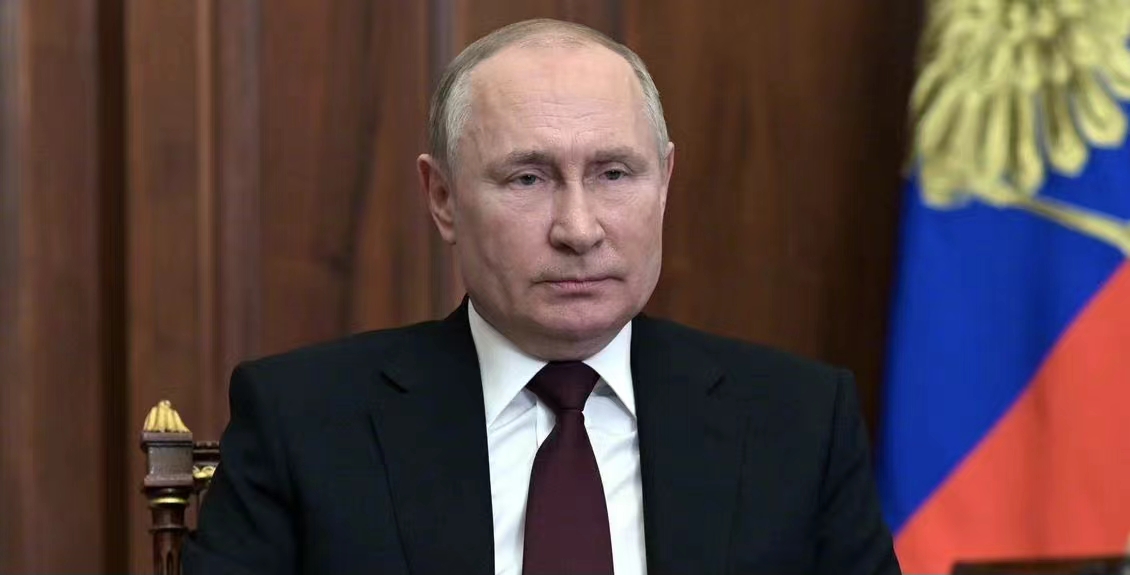
On February 21, local time, Russian President Vladimir Putin delivered a national video speech, announcing the recognition of the Donetsk People’s Republic and the Lugansk People’s Republic, which are self-proclaimed by Wudong civilian armed forces, as independent countries.
On the morning of 24th, Putin made a televised speech, saying that he decided to launch a special military operation in Donbass. On the same day, Ukrainian President Zelensky declared that the whole territory was in wartime and announced that Ukraine had broken diplomatic relations with Russia.
On February 27th, local time, Russian President Vladimir Putin ordered Russia’s strategic deterrent force to enter a state of special readiness.
Since the conflict, the two sides have held three rounds of negotiations, and no substantive results have been achieved.
[April 10th]
Russian President’s Plenipotentiary for Human Rights: Russia and Ukraine have once again exchanged detainees.
On the 10th local time, mosca Likova, plenipotentiary of Russian President for Human Rights, said that there was another exchange of detainees between Russia and Ukraine.
It is reported that the exchange took place last night, including four employees of the Russian Atomic Energy Corporation and some Russian soldiers, who flew to Russia on the morning of the 10th.
Ukraine announced a trade embargo against Russia.
On the 9th local time, Melnichuk, the representative of the Ukrainian government in Verkhovna Rada, announced that Ukraine imposed a trade embargo on Russia, and Russian goods would not be allowed to be imported into the customs territory of Ukraine.
[April 9]
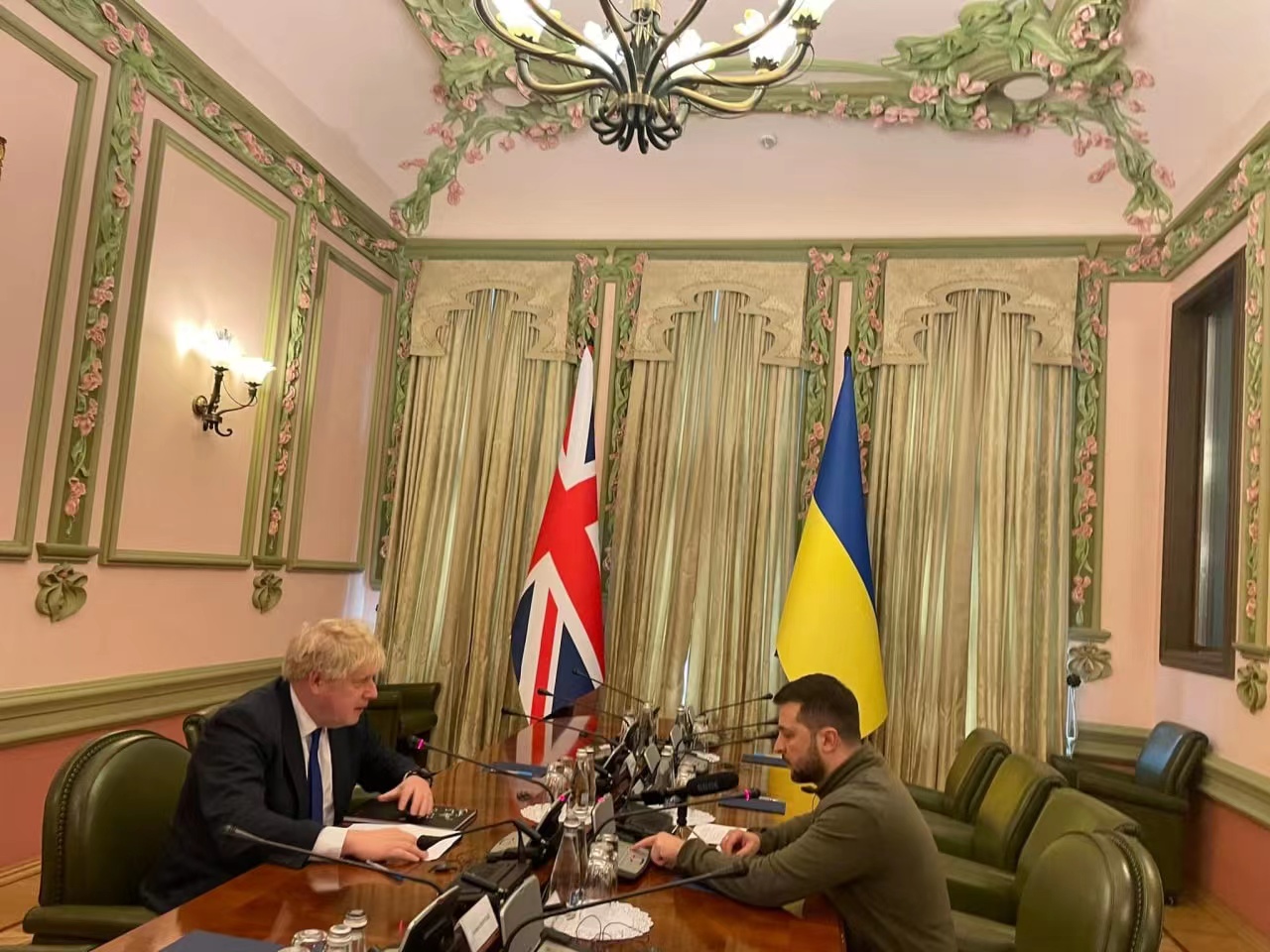
British Prime Minister Johnson secretly visited Kiev for talks with Zelensky.
On April 9th, local time, British Prime Minister Johnson secretly arrived in Kiev for one-on-one talks with Ukrainian President Zelensky. A spokesman for the British Prime Minister’s Office said on the 9th that Prime Minister Johnson had gone to Ukraine to meet with President Zelensky. They will discuss Britain’s long-term support for Ukraine, and the Prime Minister will draw up a new package of financial and military assistance.
 [March 15th]
The fourth round of Russian-Ukrainian negotiations resumed.
On the 15th local time, Ala Hamija, chairman of the parliamentary group of Ukrainian People’s Public Servant Party, announced the resumption of the fourth round of Russian-Ukrainian negotiations.
Russian Defense Ministry: Russian armed forces have completely controlled Kherson State.
On the 15th, local time, the Russian Defense Ministry announced that the Russian armed forces had completely controlled the state of Kherson. Kherson is located in southern Ukraine, adjacent to Crimea.
Biden plans to travel to Brussels next week to discuss the situation in Russia and Ukraine with NATO leaders.
According to a report by Reuters and CNN on the 14th, sources said that US President Biden will go to Brussels next week to meet with NATO leaders to discuss the situation in Russia and Ukraine. At present, White House officials are discussing letting Biden go to Europe as soon as possible, and the itinerary has not yet been finalized.
[March 14th]
Peskov: The fourth round of talks between Russia and Ukraine will be held by video on the 14th.
On the evening of 13th local time, Russian Presidential Press Secretary peskov said that the fourth round of talks between Russia and Ukraine will be held by video on 14th.
[March 13th]
Russian negotiator: The negotiations have made "substantial progress" and look forward to signing documents with Uzbekistan.
On the 13th local time, slutsky, a member of the Russian delegation to the Russian-Ukrainian negotiations, said that "substantial progress" had been made in the negotiations with Ukraine. He hoped that this would be translated into the common position of both delegations and into a "document to be signed".
Russian Presidential Press Secretary: The possibility of meeting between Putin and Ze Lenski is not ruled out.
On 13th, Russian Presidential Press Secretary peskov said that the possibility of meeting between Putin and Ukrainian President Zelensky could not be ruled out, but it was first necessary to know what was discussed at the meeting and what the result would be.
[March 12]
Ukrainian negotiator: Ukraine and Russia are tending to reach a compromise on signing a comprehensive and comprehensive agreement.
On March 12th, local time, Podolyak, a member of the Ukrainian delegation to the Russian-Ukrainian negotiations and director of the Ukrainian President’s Office, said in an interview that after the third round of negotiations between Ukraine and Russia, the two sides conducted a series of communication by video and set up a working group. At present, the two sides are close to reaching a compromise on signing relevant agreements.
Russia warns: sanctions against Russia may cause the International Space Station to crash.
On the 12th, it was reported that officials of the Russian Federal Space Agency warned that sanctions against Russia might lead to the crash of the International Space Station. The Russian Federal Space Agency will plan to optimize the cost of the International Space Station (ISS) project.
[March 10th]
Ukrainian Foreign Minister Kuleba: There has been no progress in the talks on the ceasefire issue.
On the 10th local time, after the talks between Russian and Ukrainian foreign ministers, Ukrainian Foreign Minister Kuleba held a press conference. He said that the main goal of Uzbekistan at this meeting is to open humanitarian corridors. Kuleba said that all parties talked about a ceasefire at the meeting, but no progress was made on this issue.The Russian side proposed that if Ukraine does not surrender, Russia will not cease fire, but Ukraine is very strong and we will not surrender.
Highest level meeting since the conflict between Russia and Ukraine: Russian-Ukrainian foreign ministers’ talks are held in Turkey.
With the participation of Turkish Foreign Minister cavusoglu, Russian Foreign Minister Lavrov and Ukrainian Foreign Minister Kuleba met in the outskirts of Antalya, southern Turkey, on the morning of 10th.
Russian and Ukrainian foreign ministers will hold talks soon.
On the 10th local time, Russian Foreign Minister Lavrov and Ukrainian Foreign Minister Kuleba will hold talks in Antalya, and the talks will be held at 11am local time on the 10th. It is reported that this is the first direct contact between Russian and Ukrainian high-level officials since Russia launched a special military operation on February 24.
The International Monetary Fund provided Ukraine with $1.4 billion in aid.
On the 10th local time, the International Monetary Fund (IMF) announced that it had approved to provide Ukraine with $1.4 billion in emergency aid funds to eliminate the economic consequences caused by the war.
Ukrainian Border Service: More than 12,000 Ukrainians will join the National Defence Force when they return to China.
On March 9, local time, the Ukrainian Border Service Agency issued a document on the social media platform, saying that more than 12,000 Ukrainians returned to China on the 8 th and will soon join the National Defence Force.
Ukrainian President signed a law allowing civilians to use weapons during the state of war.
On March 9, local time, Ukrainian President Zelensky signed a law allowing all Ukrainians to use weapons during the state of war.
Russian Defense Ministry: Russia has paralyzed 2,786 military infrastructures in Ukraine.
Russian Defense Ministry spokesman Konashenkov said that since the special military operation, 2,786 Ukrainian military infrastructures have been paralyzed and 953 tanks and armored vehicles have been destroyed. Konashenkov also pointed out that before the start of special military operations, the Ukrainian armed forces had 250 fighters and helicopters. Russian troops destroyed 89 fighter planes and 57 helicopters from the ground and air. 90% military airports in Ukraine have been paralyzed.
[March 9]
The United States refused to hand over the MiG aircraft from Poland and from the United States to Ukraine: there is a risk of pulling us into conflict.
The Polish Foreign Ministry issued a statement on the transfer of fighter planes to Ukraine, saying that Poland is ready to transfer all MIG -29 fighters to Germany free of charge, and these fighters will be handed over to the United States for disposal and handed over to Ukraine. However, the US Department of Defense rejected the Polish proposal, calling it "too complicated".
The Russian army will enter the "silent state" again from 10: 00 on the 9 th.
From 10: 00 Moscow time on March 9th, Russian troops carrying out special military operations will once again enter a "state of silence" and provide humanitarian corridors to Kiev, Kharkov, chernigov, Samui and upor, Mali to help local civilians evacuate.
Biden formally signed the US energy import ban on Russia.
On March 8, local time, the White House issued a statement on its website, saying that US President Biden officially signed an executive order prohibiting the United States from importing energy from Russia. The statement detailed the contents of this executive order, including: prohibiting the import of Russian crude oil and certain petroleum products, liquefied natural gas and coal; Prohibit new US investment in Russian energy sector; Americans are prohibited from funding or supporting investment in energy companies in Russia.
US media: Germany, the Netherlands and other Western European countries hope to postpone Ukraine’s accession to the EU.
EU leaders will discuss whether to grant Ukraine candidate status on the 10th. Bloomberg reported that many diplomats revealed that Germany, the Netherlands and other Western European countries hoped that the European Commission would give opinions on whether Ukraine was ready to join the EU before making a decision, in order to delay the process of Ukraine’s accession to the EU.
The last batch of Ukrainian students in China successfully boarded the special train to Lviv in the west on the evening of the 8 th.
The last batch of 115 Ukrainian students who were trapped in Samui by the war successfully boarded the special train to Lviv in the west at 9:30 pm local time on March 8, and went to the safe area in the west of Ukraine.
[March 8]
Russian Defense Ministry: Air and space forces destroyed 32 Ukrainian military facilities on the 8 th.
The Russian Ministry of Defence released the latest information on the war situation on the evening of March 8, and the Russian air and space forces destroyed 32 military facilities in Ukraine that day. Russian Defense Ministry spokesman Konashenkov said on the same day that since the beginning of military operations, Russian troops have paralyzed 2,581 Ukrainian military targets, destroyed 897 tanks and other armored vehicles, 95 multi-barrel rocket launching systems, 336 artillery and mortars, 662 military vehicles and 84 unmanned aerial vehicles.
Ukraine says two humanitarian corridors are open.
Ukrainian Deputy Prime Minister Irina Veleshuk said on the 8th that two humanitarian corridors were opened on the same day, so that civilians in the northeastern city of Samui and the southeastern port city of Mali upor could be evacuated.
Russia announced a "state of silence" for Kiev, Kharkov and other places from 10: 00 on March 8.
Russia announced that it would enter a state of silence at 10:00 Moscow time on March 8, 2022 and provide humanitarian corridors to Kiev, Kharkov, chernigov, Samui, Wooper, Mali and other cities to help local civilians evacuate. Some evacuation routes need to be further agreed with the Ukrainian side.
The EU says it will discuss Ukraine’s accession in the next few days.
European Council President Michelle said on social media that EU leaders will discuss Ukraine’s accession in the next few days.
The leaders of the United States, France, Germany and Britain spoke on the situation in Russia and Ukraine: they will continue to expand sanctions against Russia.
U.S. President Biden made a video call with French President Macron, German Chancellor Scholz and British Prime Minister Johnson, and will continue to expand sanctions against Russia and promise to provide Ukraine with security, economy and humanitarian assistance.
The third round of Russian-Ukrainian negotiations continues to focus on the issue of humanitarian corridors.
Russian and Ukrainian delegations held the third round of negotiations in Belovezhsenlin, Belarus on the 7th. The two sides have made some achievements in safeguarding humanitarian corridors, but limited progress has been made in the political and military fields, which has not achieved the expected results. The two sides agreed to continue intensive consultations.
[March 7]
The third round of Russian-Ukrainian negotiations has no substantive results, and ceasefire consultations will continue.
On the evening of March 7, local time, after the third round of Russian-Ukrainian negotiations ended, a member of the Ukrainian delegation said that consultations with Russia on ceasefire and cessation of hostilities would continue, and relevant issues have not yet yielded substantive results. Podolyak, an adviser to the Office of the President of Ukraine, also said that the third round of talks between Russia and Ukraine failed to achieve any substantial improvement in the situation.
The third round of Russian-Ukrainian negotiations began.
On the afternoon of March 7, local time, the third round of Russian-Ukrainian negotiations began.
The helicopter of the Ukrainian delegation participating in the Russian-Ukrainian negotiations arrived at the meeting site.
On March 7, local time, the helicopter of the Ukrainian delegation participating in the Russian-Ukrainian negotiations arrived at the meeting site.
Indian Prime Minister Modi and Russian President Vladimir Putin discussed the situation in Ukraine by telephone.
On March 7, Indian Prime Minister Modi had a talk with Russian President Vladimir Putin on the Ukrainian issue. This is the third telephone conversation between the two leaders since Russia took special military action against Ukraine on February 24. During the 50-minute conversation, the two sides discussed the situation in Ukraine, and President Putin briefed Prime Minister Modi on the status of negotiations between Russia and Ukraine. During the conversation, Prime Minister Modi hoped that Putin and Ukrainian President Zelensky would hold direct talks as soon as possible. Prime Minister Modi also highly appreciated Russia’s practice of establishing humanitarian corridors in parts of Ukraine.
Russian Presidential Press Secretary: If Uzbekistan agrees to all conditions, Russia can cease fire at any time.
On March 7, local time, Russian Presidential Press Secretary peskov said that Russia’s demilitarization of Ukraine has actually come to an end, and Russia will achieve this goal. Russia’s demands on Ukraine include stopping all military actions, writing into the Constitution its refusal to join any alliance for any purpose, recognizing Crimea as belonging to Russia, and recognizing the independent status of Donetsk and Lugansk. He stressed that if Uzbekistan does the above, Russia can cease fire at any time.
The Russian delegation has arrived in Belarus for the third round of Russia-Ukraine negotiations.
On the 7th local time, according to the information displayed on the Flightradar website, the plane of the Russian delegation participating in the third round of Russia-Ukraine negotiations has landed at Brest Airport in Belarus.
Ukrainian President’s Office: The third round of Russian-Ukrainian negotiations will start at 22: 00 Beijing time on the 7 th.
The adviser of the Office of the President of Ukraine said that the third round of Russian-Ukrainian negotiations will start at 17: 00 Moscow time on the 7th (22: 00 Beijing time).
The Russian government has approved the list of unfriendly countries and regions, including Britain and the United States.
On the 7th local time, the Russian government has approved the list of unfriendly countries and regions, including the United States, EU member states, Britain, Ukraine, Japan and some other countries.
The Russian delegation has arrived in Belarus for the third round of Russia-Ukraine negotiations.
On the 7th local time, according to the information displayed on the Flightradar website, the plane of the Russian delegation participating in the third round of Russia-Ukraine negotiations has landed at Brest Airport in Belarus.
The third round of Russian-Ukrainian talks will begin on the afternoon of March 7, local time in Belarus.
According to the Interfax news agency, the third round of Russian-Ukrainian talks will begin in the afternoon of March 7, local time in Belarus.
The Russian army announced that it would enter a "state of silence" and open humanitarian channels in many places in Ukraine.
The Russian Humanitarian Headquarters said that the Russian armed forces will declare a "state of silence" from 10 am local time on March 7 in Moscow. At the same time, humanitarian passages were opened in Kiev, upor, Kharkov and Samui. The Russian military will use drones to monitor the evacuation of residents in various places to prevent sabotage by Uzbekistan.
Russian Defense Ministry: The combat effectiveness of the Ukrainian Air Force has been basically lifted.
On March 6, local time, the Russian Ministry of National Defense held a press conference to inform the latest progress of Russian military operations against Ukraine. According to the report, the Russian army has basically lifted the combat effectiveness of the Ukrainian armed forces air force and warned neighboring countries in the region not to provide airports as bases for Ukrainian fighters.
[March 6]
Putin: Russia is ready to engage in dialogue with Ukraine and foreign partners to resolve conflicts.
On March 6, local time, Russian President Vladimir Putin confirmed in a call with Turkish President Erdogan that Russia was prepared to engage in dialogue with Ukrainian authorities and foreign partners to resolve the conflict, and stressed that any attempt by Kiev, Ukraine to delay the negotiation process was futile.
IMF warns that the conflict between Russia and Ukraine will have a serious impact on the global economy.
The International Monetary Fund said that the ongoing war and related sanctions will have a serious impact on the global economy. IMF Managing Director Georgieva presided over the meeting on the 4th, and said that the current situation in Russia and Ukraine has caused the prices of energy and wheat to soar, which has aggravated the inflationary impact caused by the COVID-19 epidemic and the shortage of global supply chains.
Putin: The task of Russian troops attacking military infrastructure in Ukraine is coming to an end.
On March 5, local time, Russian President Vladimir Putin said that Russia’s military operations against Ukraine are proceeding smoothly as planned, and the task of cracking down on military infrastructure in Ukraine is nearing completion. Russian Defense Ministry spokesman Konashenkov said that since the beginning of Russian military operations against Ukraine, a total of 2,119 Ukrainian military infrastructures have been paralyzed, including 74 command posts, 108 air defense missile systems and 68 radar stations. Russian troops destroyed 90 planes, 748 tanks and armored vehicles, 76 multi-barrel rockets, 274 guns and mortars, 532 military vehicles and 59 unmanned aerial vehicles in Ukraine.
There are different opinions about the cause of death of a Ukrainian negotiator.
On March 5th, local time, a number of Ukrainian media, including Ukrainian official news agency Wutong News Agency, reported that Genese Kireev, the Ukrainian representative who participated in the first round of Russian-Ukrainian negotiations, was killed in Kiev that day. However, there are different opinions about the cause of his death in Ukraine.
Ukraine: The third round of Russian-Ukrainian negotiations was held in Belarus on March 7.
On March 5, local time, the Ukrainian delegation confirmed that the third round of Russian-Ukrainian negotiations will be held on the 7 th, and the venue of the talks is still in Belarus.
[March 5]
Russian troops entered a state of silence in Ukraine, and humanitarian channels were opened.
The Russian Ministry of Defence announced on March 5th local time that Russian troops entered a state of silence in Ukraine at 10: 00 Moscow time, and opened humanitarian passages for civilians to leave upor and Vornovaha in Mali. The humanitarian corridors and evacuation routes have been agreed with the Ukrainian side.
Ukrainian President Zelensky said that he is still in Kiev.
In the early morning of March 5th, Moscow time, Ukrainian President Zelensky said that he was "still in Kiev, the capital of Ukraine, and had not traveled to other areas".
Earlier on the 4th, Russian State Duma Chairman Volodin said that Ukrainian President Zelensky had left Ukraine and was now in Poland. Subsequently, the Verkhovna Rada (Parliament) of Ukraine announced that Zelensky was still in Kiev and had not left Ukraine. (Reporter Wang Delu, General Desk)
Putin: Russia is willing to talk to Ukraine on the premise of meeting Russia’s requirements.
Russian President Vladimir Putin had a telephone conversation with German Chancellor Angela Scholz on the 4th, and the two sides exchanged views on the development of the Ukrainian situation.
Putin said that Russia is willing to engage in dialogue with Ukraine and all those who want peace in Ukraine, but only if all Russian demands are met. These requirements include ensuring Ukraine’s neutral and nuclear-free status, "demilitarization" and "de-Nazism", recognizing Russia’s sovereignty over Crimea, and the sovereignty and borders of Donetsk and Lugansk. He stressed, "I hope that the Kiev representative will take a reasonable and constructive position in the planned third round of negotiations."
The first temporary flight to take back China citizens evacuated from Ukraine arrived safely.
At 5: 41 a.m. on March 5, the first temporary flight to take back citizens evacuated from China from Ukraine arrived in Hangzhou safely.
Security Council urgently considers the safety of Ukrainian nuclear facilities.
The United Nations Security Council held an emergency public meeting on the safety of nuclear facilities in Ukraine on the 4th. The United States, Britain, France and other countries condemned Russia’s military action against nuclear power plants and demanded that Russia immediately withdraw its troops. Representatives of Brazil and other countries called for preventing the recurrence of the tragedy at the Chernobyl nuclear power plant.
The third round of Russian-Ukrainian negotiations will be held on the 5th or 6th.
NATO reiterates that it will not impose a no-fly zone in Ukraine.
Podolyak, adviser to the Office of the President of Ukraine, said on the 4th that the third round of negotiations between the Ukrainian and Russian delegations will be held on the 5th or 6th. NATO Secretary General Stoltenberg said on the 4th that NATO will not directly participate in the conflict between Russia and Ukraine, so it will not set up a no-fly zone over Ukraine at its request.
G-7 calls on Russia to withdraw its troops from Ukraine or face further sanctions.
On March 4th, local time, senior diplomats from G7 countries jointly issued a warning, calling on Russia to immediately stop its military operations in Ukraine and withdraw its troops, otherwise it may face further sanctions.
The Russian Federal Bureau of Communications, Information Technology and Mass Media Supervision decided to block Twitter.
On March 4, local time, the Russian Federal Bureau of Communications, Information Technology and Mass Media Supervision decided to block social media Twitter in Russia. At present, users in Russia have been unable to use Twitter normally.
 [March 4th]
US Deputy Secretary of State: If Russia stops its military operations in Ukraine, the West will lift new sanctions against Russia.
On March 4th, local time, US Deputy Secretary of State victoria nuland said in an interview with Tass news agency that if Russia stops its special military operations in Ukraine, the West will lift the new sanctions against Russia.
At present, the Russian side has no response to this.
Ministry of Emergency Situations of Ukraine: There was no fire at the Zaporoze nuclear power plant.
On March 4th, local time, the Ministry of Emergency Situations of Ukraine announced that there was no fire at the Zaporoze nuclear power plant. The burning building was an exercise training facility near the nuclear power plant, and the 3rd, 4th and 5th floors of this five-story building were swallowed up by flames. The fire did not damage the main facilities of the nuclear power plant.
US President Biden spoke with Ukrainian President Zelensky.
On March 3, local time, NBC quoted White House officials as saying that US President Biden spoke with Ukrainian President Zelensky.
The Zaporoge nuclear power plant in Ukraine caught fire.
On March 4, local time, local officials in Zaporoze, Ukraine said that the Zaporoze nuclear power plant caught fire.
The flagship of the Ukrainian navy was sunk.
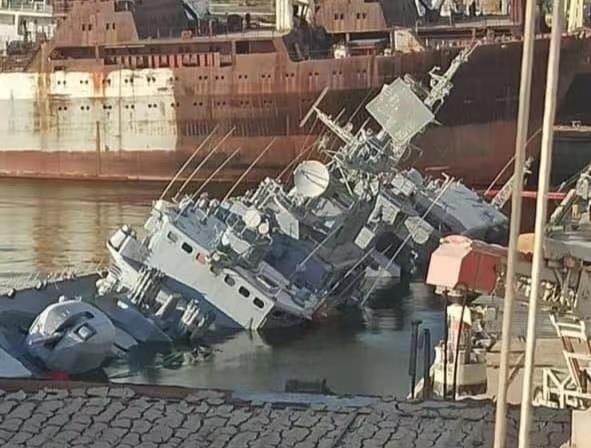 On March 3rd, local time, the flagship of the Ukrainian navy "guttman Sagaidachni" was sunk.
The White House announced sanctions against eight Putin cronies and their families.
On March 3, local time, the White House issued a statement saying that it will impose sanctions on eight people and their families who have close ties with Russian President Vladimir Putin. The sanctions include cutting off their ties with the US financial system, freezing assets in the United States, and disabling assets. The US Department of Justice and the Treasury will also consider sharing information and evidence to support criminal prosecution and seizure of assets.
The White House also said that the Ministry of Finance will sanction seven Russian entities and 26 individuals in Russia and Ukraine. The US State Department also announced a new visa restriction order on the same day, imposing visa restrictions on 19 Russian oligarchs and their 47 family members and close partners.
At the end of the second round of talks between Russia and Ukraine, the two sides reached an agreement on a temporary ceasefire and the establishment of a humanitarian channel.
On March 3, local time, the second round of talks between Russia and Ukraine ended, and Russia and Ukraine reached an agreement on a temporary ceasefire to establish a humanitarian channel.
The two sides will maintain communication and cooperation around the establishment of a humanitarian corridor in the near future.
The Ukrainian side said that it did not get the expected negotiation results. Russia and Ukraine agreed to hold the third round of negotiations as soon as possible.
EU to cancel Russia’s most-favored-nation trade status
A spokesman for the European Commission said on March 3 local time that the EU is seeking to cancel Russia’s most-favored-nation trade status within the framework of the World Trade Organization, which will enable the EU to impose higher tariffs on Russian products than WTO members.
The bilateral trade volume between the EU and Russia in 2020 is about 95 billion euros, of which oil and gas trade accounts for 70%, and the average tariff rate imposed by the EU on WTO members is 5.1%.
The World Trade Organization stipulates that all members enjoy the most-favored-nation treatment on an equal footing. However, the "national security exception" clause in the multilateral trade rules of the WTO gives members the discretion to take measures such as canceling MFN treatment to protect their "basic security interests".
[March 3]
Members of the Ukrainian delegation denied that the Ukrainian-Russian negotiations would be held in Belovezhsenlin.
Ala Hamija, chairman of the parliamentary group of the Ukrainian People’s Public Servant Party, said on the 2nd that the talks between the Ukrainian and Russian delegations will not be held in Belovezhsenlin in Belarus. The previous statement that the talks will be held in Belovezhsenlin is not true.
According to the Ukrainian Interfax news agency, Ala Hamija posted on social media that Ukraine and Russia will indeed hold the second round of negotiations, but the venue of the negotiations is another place. He said, "all the details will be released later."
The emergency special session of the United Nations General Assembly adopted a draft resolution on the situation in Ukraine.
On March 2, local time, members of the 11th Emergency Special Session of the United Nations General Assembly voted and adopted a draft resolution on the situation in Ukraine, which was jointly submitted by more than 90 countries including Ukraine.
There were 141 votes in favor, 5 votes against and 35 abstentions. As the affirmative votes exceeded two thirds of the valid votes, the draft resolution was adopted. Russia, Syria, Belarus, North Korea and Eritrea voted against it, while China abstained.
Compared with the previous draft rejected by the Security Council, the General Assembly resolution not only demands that Russia withdraw its troops from Ukraine "immediately, completely and unconditionally", but also adds relevant provisions for Belarus.
Since the resolution of the United Nations General Assembly is not legally binding on Member States except for some projects run by the United Nations itself, the implementation of the resolution remains to be seen.
Nearly 500 Russian troops have been killed in Ukraine.
According to the British Sky News Network reported on the 2nd, the Russian Defense Ministry said that since Russia launched special military operations in Ukraine, 498 Russian troops have been killed in Ukraine and another 1,597 have been injured. This is the first time that Russia has disclosed the casualties of this military operation.
Mezinski, head of the Russian delegation: The topics of the Russian-Ukrainian talks include a ceasefire
On March 2, local time, before the second round of Russian-Ukrainian talks, Mezinski, head of the Russian delegation, told the media that the topics of the Russian-Ukrainian talks included a ceasefire.
On the afternoon of the 2nd, the Russian delegation arrived at Belovezhsenlin on the border of Bai Bo, where the second round of Russian-Ukrainian talks was held.
Earlier in the day, the Ukrainian delegation confirmed its participation in the second round of Russian-Ukrainian talks.
[March 2]
EU approves sanctions against Belarus
France, the rotating presidency of the European Union, announced through social media on March 2 local time that the EU decided to impose sanctions on Belarus on the grounds of supporting Russia’s special military action against Ukraine.The sanctions mainly prohibit Belarus’ timber, steel and potash products from being exported to EU countries.
At present, there are different opinions on whether the Russian-Ukrainian talks scheduled for March 2 will be cancelled.
According to a reporter from the Central Radio and Television General Station, there are different opinions on whether the Russian-Ukrainian negotiations scheduled for March 2 will be cancelled. According to the Tass news agency, the Russian-Ukrainian negotiations have not been cancelled, and the two sides are still negotiating the time and place of the negotiations. According to Sputnik news agency & radio, the Ukrainian delegation has not yet reached the place where the Russian side will hold talks with Bai Bo. Some analysts said that the Russian-Ukrainian talks may not be held on the 2nd, but postponed until this weekend.
Russian Defense Ministry: The Russian army has completely controlled the southern Ukrainian city of Hellson.
On March 2, local time, the Russian Defense Ministry said that Russian troops had completely controlled the southern Ukrainian city of Hellson.
106 Ukrainian students studying in China have successfully entered Poland.
At about 4: 00 am local time in Poland on March 2, 106 Ukrainian students studying in China led by Miao Fei, Scientific and Technological Counselor of the Ukrainian Embassy in Ukraine, all successfully cleared customs and entered Poland. According to Yao Dongye, Political Counselor of the China Embassy in Poland, the 106 international students will take three buses to Warsaw, and the accommodation has been properly arranged.
The United States officially announced the closure of its airspace to Russia.
On the evening of March 1, local time, US President Biden officially announced in his first State of the Union address that Russian aircraft were prohibited from entering US airspace.
Lukashenko ordered more troops to the Ukrainian border.
Belarusian President Lukashenko said on March 1 local time that he had ordered to send more troops near the Ukrainian border in the south of the country to protect the region. That day was the sixth day that Russia took special military action against Ukraine. Lukashenko said that the Belarusian army will not participate in military operations against Ukraine.
Ukrainian President Zelensky expressed his willingness to hold direct dialogue with Russian President Vladimir Putin.
On March 1, local time, Ukrainian President Zelensky said in an interview with the media that he was willing to hold a direct dialogue with Russian President Vladimir Putin.
China citizens injured in Ukraine are out of danger.
On the evening of March 1st, Beijing time, a citizen of China reported that a citizen of China was shot and injured on his way out of Ukraine. The Embassy of China in Ukraine has contacted the parties immediately to provide active assistance. It is understood that the injured are temporarily out of danger. The embassy in Ukraine will continue to pay close attention to the situation of the injured and provide necessary assistance. The Ministry of Foreign Affairs once again reminds Ukrainian citizens in China to strengthen security.
The emergency special session of that United nation general assembly will vote on the draft resolution submitted by Ukraine on March 2.
On March 1, local time, a spokesman for the President of the UN General Assembly said that the emergency special session of the UN General Assembly will vote on the draft resolution submitted by Ukraine at 10 am EST on March 2. The resolution needs more than two-thirds of the non-abstention votes of the General Assembly to be adopted.
[March 1st]
The Russian government plans to temporarily restrict the withdrawal of foreign capital from the Russian market.
On March 1st, Russian Prime Minister Mishustin said that the Russian government had drafted a presidential decree to temporarily restrict the withdrawal of foreign capital from the Russian market. Mishustin said that in the current situation, foreign companies have to consider not only economic factors, but also political factors. This new policy is to give those foreign-funded enterprises preparing to withdraw from the Russian market the opportunity to weigh the pros and cons.
Sources: The second round of Russian-Ukrainian talks may be held on the border of Bai Bo on March 2.
On March 1st, local time, a reporter from China Central Radio and Television General Station interviewed Yuri Voskresenski, a Belarusian political scholar and a source of Russian-Ukrainian negotiations. He said that the second round of Russian-Ukrainian talks may be held on March 2nd in Brest, Bai Bo. One of the possible locations is the villa Viskuli, which is 8 kilometers away from the Polish border. He also revealed that the Ukrainian delegation will add two members of the Verkhovna Rada (Parliament).
Some Chinese were shot and injured in Ukraine and have been sent to hospital for treatment.
On March 1, local time, a Chinese was shot and injured on the way from eastern Ukraine to Lviv, and has been sent to hospital for treatment.
Russian Foreign Minister Lavrov: The West should stop building military facilities in the territory of the former Soviet Union.
On March 1, local time, Russian Foreign Minister Lavrov said that the West should stop building military facilities in the territory of the former Soviet Union. Russia cannot accept that American nuclear weapons are deployed in Europe, and they should be withdrawn to the United States immediately. Russia urges the United States to strictly fulfill its obligations and not to strengthen its own security at the expense of the security of other countries. Russia has doubts about the construction of the AUKUS alliance. The alliance has had a negative impact on the Treaty on the Non-Proliferation of Nuclear Weapons and triggered an arms race. Lavrov said that the Kiev authorities plan to hold nuclear weapons and threaten international security. Lavrov also said that for Russia, the legally binding security guarantee of NATO countries is crucial.
FIVB announced the cancellation of Russia’s right to host the 2022 World Championships.
On March 1, local time, FIVB announced the cancellation of the right to host the 2022 World Championships in Russia.
Russian Defense Minister: Russian troops will continue to carry out special military operations in Ukraine until they achieve their set goals.
On March 1, local time, Russian Defense Minister shoigu said that Russian troops will continue to carry out special military operations in Ukraine until the set goals are achieved.
The Ukrainian capital Kiev sounded the alarm again.
At 11 o’clock local time on March 1, the Ukrainian capital Kiev once again sounded a continuous alarm.
Zelensky will deliver a speech at the European Parliament on the afternoon of March 1.
Ukrainian President Zelensky will address the European Parliament on the afternoon of March 1st local time.
The square of the government building in Kharkov, Ukraine was shelled.
On March 1, local time, the square of the government building in the center of Kharkov, Ukraine was shelled.
Zelensky signed an order to implement a visa-free system for foreign mercenaries going to Ukraine
On March 1, local time, Ukrainian President Zelensky signed an order to implement visa-free system for foreign mercenaries going to Ukraine. The law is only valid in wartime.
The EU has officially started the process of considering Ukraine’s application for membership.
On March 1st, Vsevolod Chentsov, Ukraine’s representative to the European Union, said that the EU had officially started the process of reviewing Ukraine’s application for membership.
Lukashenko: Belarus will not and will not participate in Russia’s special military operations.
On March 1, local time, at the Belarusian security conference held on the same day, Belarusian President Lukashenko said that Belarus would not participate or prepare to participate in Russian special military operations. Lukashenko also expressed the hope that this conflict will not trigger a global conflict. Lukashenko said that Minsk is ready to talk to anyone at any time to maintain peace in the region.Lukashenko also commented on the negotiations between Russia and Ukraine, saying that this negotiation triggered cautious optimism. He also praised the outstanding work of the Russian and Ukrainian representatives.
Bulgaria, Poland and Slovakia plan to provide 70 fighter planes to Ukraine.
On March 1, local time, according to the news released by the Ukrainian Navy Information Bureau on social media, Bulgaria, Poland and Slovakia plan to provide Ukraine with 70 fighters of MIG -29 and Su -25 models. These fighters will be deployed at airports in Poland.
G-7 leaders hold teleconference on the situation in Russia and Ukraine.
At 1 o’clock local time on March 1st, Japan, the leaders of the Group of Seven held a teleconference on the situation in Russia and Ukraine, with Japanese Prime Minister kishida fumio attending. The heads of state condemned Russia’s military action against Ukraine, and expressed the need to take strong sanctions, and reached a consensus on continuing to jointly support the Ukrainian government and the asylum seekers.
Ukrainian President: The Russian-Ukrainian talks failed to achieve the expected results.
On March 1, local time, Ukrainian President Zelensky said after the Russian-Ukrainian talks that the current talks have not achieved the expected results. The Russian side expressed its position and the conditions for ending the war, and the Ukrainian side also got some signals from it. When the Ukrainian delegation returns to Kiev, it will evaluate these positions and conditions, and then determine how to conduct the second round of negotiations.
Mayor of Kharkov, Ukraine: Russian troops are attacking Kharkov substation.
In the early morning of March 1, local time, the mayor of Kharkov, Ukraine, said that Russian troops were attacking the Kharkov substation, causing problems in the city’s power supply and water supply.
[February 28th]
The United Nations Human Rights Council decided to hold an emergency debate on the situation in Ukraine this week.
The 49th session of the United Nations Human Rights Council voted on February 28th to agree to the request made by the representative of Ukraine to hold an emergency debate on the situation in Ukraine later this week.
Russian Permanent Representative to the United Nations Nie Bianjia: The United States will expel 12 members of the Russian delegation to the United Nations.
On February 28, local time, Russian Permanent Representative to the United Nations Niebianjia made a dramatic scene when he held a press conference at the end of the rotating presidency of the Security Council. Niebianjia’s speech was interrupted by a phone call. Nie Bianjia then told reporters that he had just been confirmed that the Russian Permanent Mission to the United Nations had received a notice from the United States that 12 Russian delegation staff members were classified as "persona non grata" and asked to leave the country on March 7.
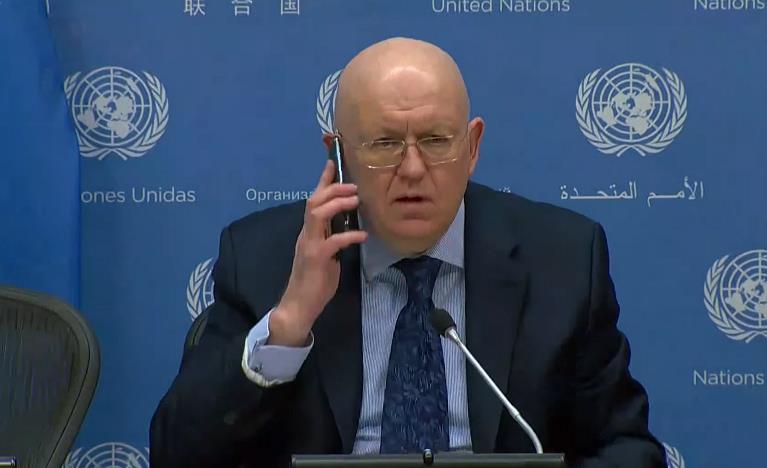 △ Russian Permanent Representative to the United Nations Nie Bianjia was notified at the scene.
Niebianjia said that the United States continues to violate the obligations of the country where the United Nations is located. At present, we don’t know who specifically asked to leave the country, and we don’t know the reason why the United States acted like this for the time being. Nie Bianjia said that Russia will counter it.
Embassy of China in Ukraine: The first batch of China students have been evacuated from Kiev to Moldova.
On February 28th, local time, the Ukrainian Embassy in China reported that at 17: 00 local time in Kiev, the first batch of international students left the Red Room of Kiev University for Moldova. The Embassy or Consulate of China in Ukraine coordinates the local police to provide security guards. A large number of international students will be evacuated today.
The next round of negotiations will be held on the border of Bai Bo after the conclusion of Russian-Ukrainian negotiations.
On the evening of February 28th local time, the negotiations between Russia and Ukraine in Belarus ended. Mezinski, head of the Russian delegation, said that the next round of talks will be held on the border between Belarus and Poland.
A press conference will be held soon after the conclusion of Russian-Ukrainian negotiations.
On the evening of February 28th, local time, the negotiations between Russia and Ukraine in Belarus ended, which was also the last round of negotiations between Russia and Ukraine that day. Later, Russia and Ukraine will hold a press conference.
Putin told Macron: Three points must be reached to solve the Ukrainian issue.
According to the news from Kegong, the presidents of Russia and France had a serious and in-depth exchange of views on all aspects of the situation in Ukraine. Russian President Vladimir Putin told French President Macron on the phone that the Ukrainian issue can only be solved if Russia’s security interests are taken into account.
Putin said that the settlement of the Ukrainian issue needs to meet the following conditions, including: recognizing Russia’s sovereignty over Crimea; Demilitarization and de-Nazism of Ukraine; Ukraine guarantees neutrality.
 The emergency special session of the General Assembly is held, Guterres: The world is facing a critical moment.
On February 28th, local time, an emergency special meeting of the United Nations General Assembly on the situation in Ukraine and Russia was held. UN General Assembly President Shahid and Secretary General Guterres attended and delivered speeches.
Shahid called for an immediate ceasefire, and all parties should exercise utmost restraint and seek a peaceful solution to the problem. He said that there is no winner in the war, but countless lives will perish. He also said that at present, 500,000 refugees have flooded into the eastern part of the European Union in Ukraine, calling on all countries to support humanitarian initiatives. Shahid stressed that humanitarian law must be observed and diplomacy must prevail.
Guterres said in his opening speech that the world is facing a critical moment, and the latest developments in Ukraine are of serious concern. Guterres said that the Minsk agreement was approved by the Security Council, but now it is being destroyed. "Now is the time for restraint, rationality and demotion."
The third round of Russian-Ukrainian negotiations has begun and is expected to be the final round.
On the afternoon of February 28th, local time, the third round of negotiations between Russia and Ukraine in Belarus has started and is expected to be the final round.
Adviser to the Office of the President of Ukraine: Russia and Ukraine will start the third round of negotiations in a few minutes.
The adviser of the Ukrainian President’s Office said that the Russian-Ukrainian negotiations will continue on the afternoon of February 28th local time, and the third round will start in a few minutes.
Ukrainian President Zelensky signed a formal application document for joining the European Union.
On February 28th, local time, Baitong News Agency quoted "Ukrainian Truth" as saying that Ukrainian President Zelensky signed the formal application documents for joining the European Union.
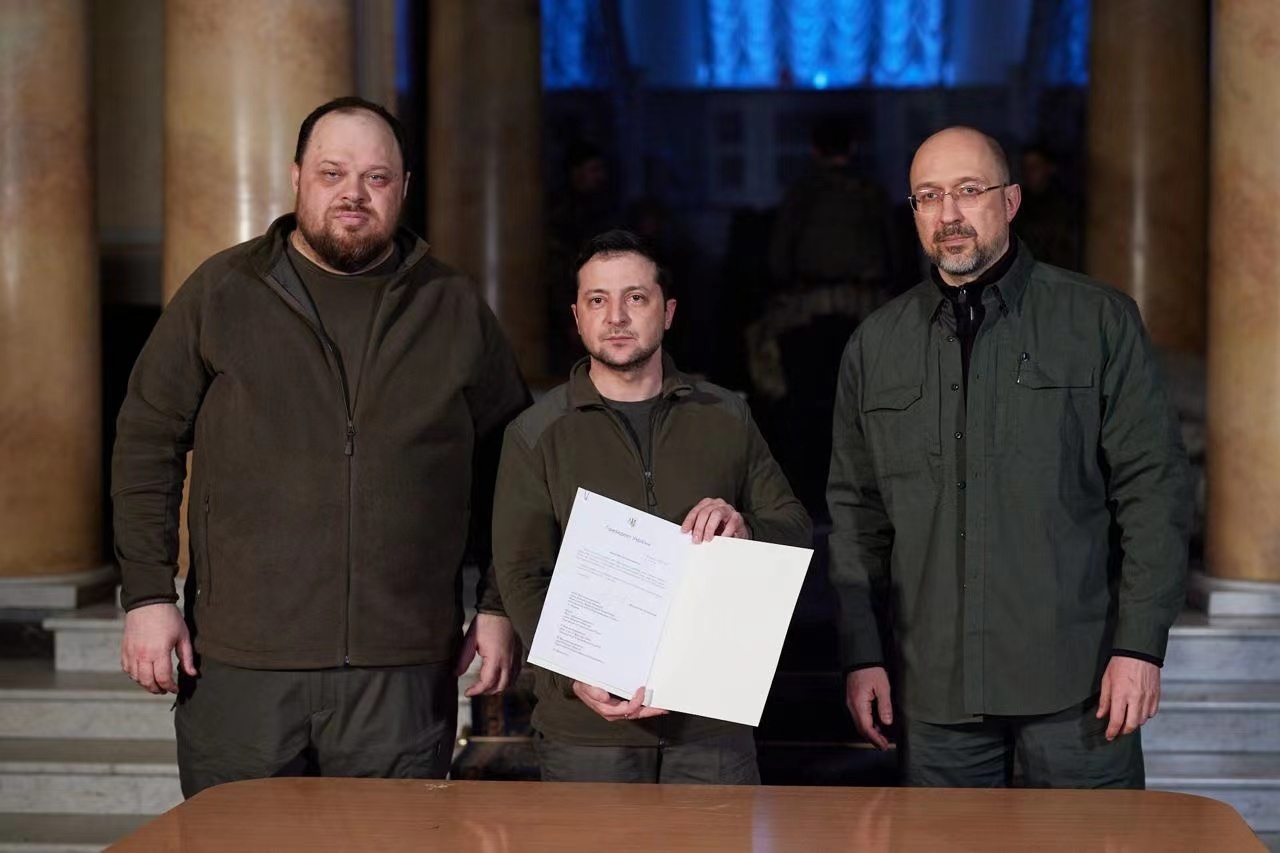 On February 28th, local time, Ukrainian President Zelensky signed the formal application documents for joining the European Union.
Russian Foreign Ministry: It has reported to the United Nations Secretariat that Russian Foreign Minister Lavrov cannot visit Geneva.
On February 28, local time, the Russian Foreign Ministry said that it had reported to the United Nations Secretariat that Russian Foreign Minister Lavrov could not visit Geneva, and there was no result yet.
Earlier in the day, it was reported that Russian Foreign Minister Lavrov’s trip to Geneva had been cancelled due to the EU’s blockade of Russian flights.
The United States prohibits the Russian central bank from trading in dollars
On February 28th, local time, a senior official of the US government said that the United States took measures to prohibit the Russian central bank from trading in any US dollar, and completely stopped Russian direct investment funds, so as to prevent Russia from mitigating the impact of sanctions through "emergency funds" or "emergency savings accounts".
According to US officials quoted by CNN, during Russia’s military action in Ukraine, this move will make it impossible for Russia to use its foreign exchange reserves to cushion the plunge of the ruble and no longer use US dollar funds.
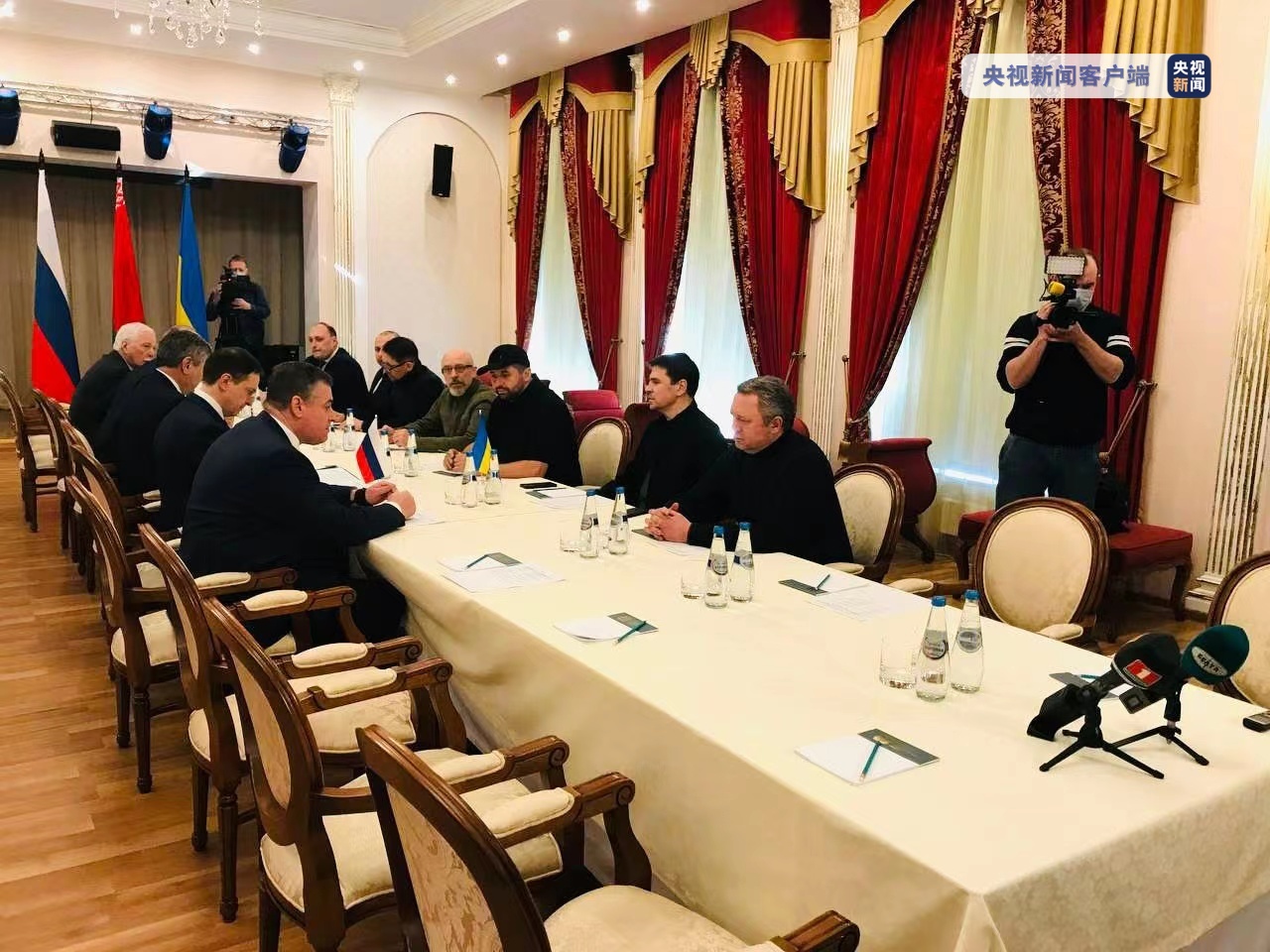 Russian-Ukrainian negotiations temporarily ended.
On the afternoon of February 28, local time, the Ukrainian media released a message saying that the Russian-Ukrainian negotiations had just ended. However, the Tass news agency quoted sources as saying that the negotiations are still in progress.
UNHCR: Over 500,000 refugees fled Ukraine.
On February 28th, local time, filippo Grandi, the United Nations High Commissioner for Refugees, said that the situation in Russia and Ukraine had caused more than 500,000 refugees to flee from Ukraine to neighboring countries.
Adviser to the Office of the President of Ukraine: During the talks, Uzbekistan demanded the withdrawal of all Russian troops.
On February 28th, local time, Liesto, adviser to the Office of the President of Ukraine, said that during the talks, Ukraine demanded the withdrawal of all Russian troops, including from Crimea and Donbass.
Russian defense minister: strategic missile forces, northern fleet, etc. are in a state of readiness.
Russian Defense Minister shoigu reported to Putin on February 28th that, according to his orders, the personnel on duty of the strategic missile force, the Northern Fleet, the Pacific Fleet and the Strategic Aviation Command have all been strengthened and put into combat readiness.
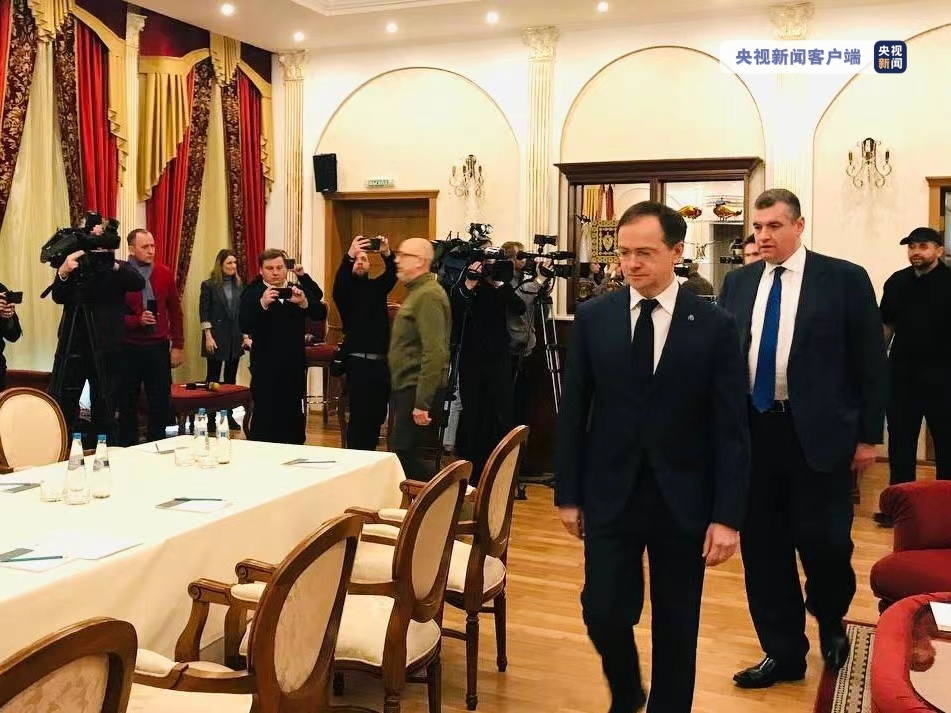
Talks between Russia and Ukraine officially started.
On February 28th, local time, the Russian delegation and the Ukrainian delegation started negotiations in Gomel, Belarus, near the border with Belarus.
 Ukrainian President Zelensky called on the EU to immediately approve Ukraine’s accession to the EU.
On February 28th, local time, Ukrainian President Zelensky called on the EU to immediately open special approval procedures and approve Ukraine to join the EU through social networks.
NATO Secretary-General and Ukrainian President will continue to provide weapons and equipment to Ukraine by telephone.
NATO Secretary-General Stoltenberg announced through social media on February 28th local time that he had a telephone conversation with Ukrainian President Zelensky that day. During the conversation, he said that NATO would continue to provide air defense and anti-tank weapons to Ukraine, and at the same time provide financial and humanitarian assistance.
On the same day, borrell, the EU’s High Representative for Foreign Affairs and Security Policy, also said that the EU would provide financial support for the delivery of weapons to Ukraine.
Polish government: Ukrainian refugees can enter Poland.
On February 27th, local time, the Polish government issued a notice in official website, saying that all people who want to escape the war in Ukraine can enter Poland at present.
The Ukrainian delegation sent six people to participate in the Russian-Ukrainian talks.
The Ukrainian delegation will send six people, including Ukrainian Defense Minister Reznikov, to the Russian-Ukrainian talks to be held at 12 noon local time on February 28th.
Office of the President of Ukraine: The core issue of the Russian-Ukrainian talks is an immediate ceasefire and withdrawal.
On the 28th local time, the office of Ukrainian President Zelensky said that the core issue of the talks was an immediate ceasefire and withdrawal.
The specific location chosen by Russia and Ukraine to negotiate in Gomel State near the border with Belarus was not announced.
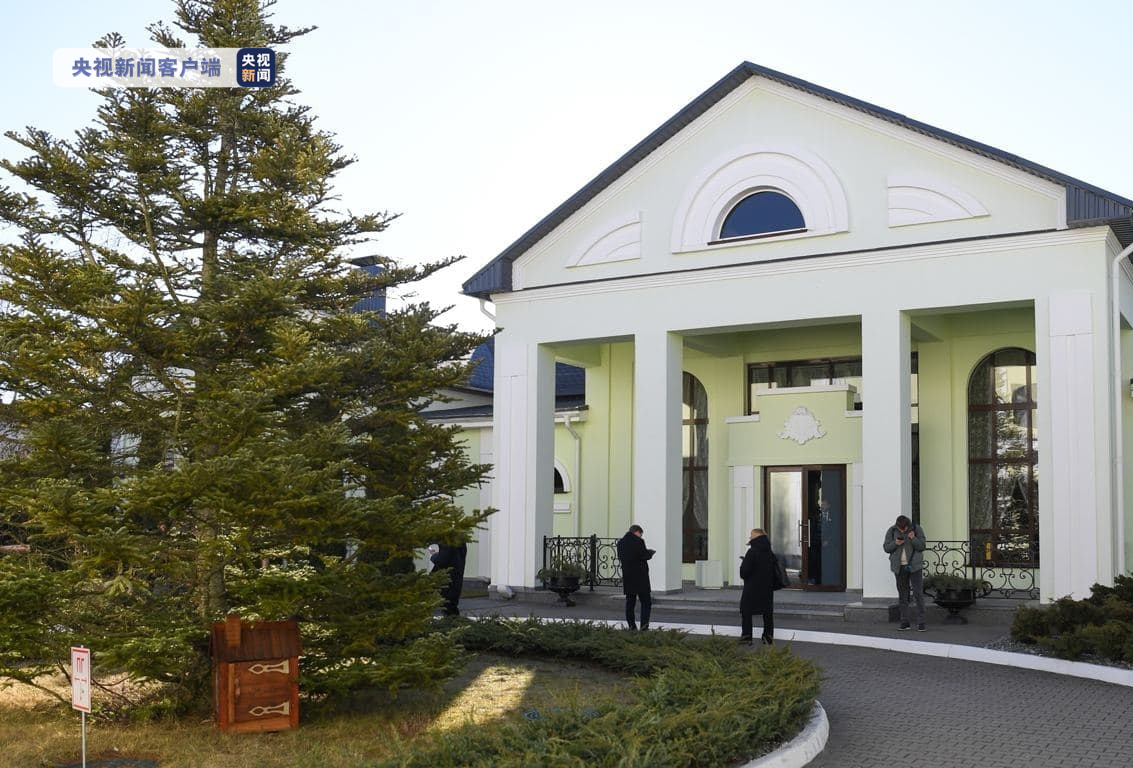 △ The reception desk directly attacked the Russian-Ukrainian talks site near the border with Belarus.
The venue of the Russian-Ukrainian negotiations was changed several times on the 27th. According to the latest report of Russian media on 28th, the meeting place of the two sides is near the border between Belarus and Uzbekistan in Gomel State, located on the banks of Pripyat River.
For security reasons, the current specific location has not been announced to the outside world. Negotiators called it "the fisherman’s cabin".
According to Voskresenski, an insider of the Russian-Ukrainian negotiations interviewed by a reporter from the Central Radio and Television General Station, the venue of the negotiations is not far from the border checkpoint of Alexandre Lowka on the Belarus-Ukraine border.
The Ukrainian delegation has arrived at the meeting place between Russia and Ukraine.
On February 28th, local time, the Ukrainian delegation arrived at the meeting place between Russia and Ukraine.
Head of the Russian delegation: Russia intends to reach a consensus with Uzbekistan as soon as possible.
On the 28th local time, Mezinski, head of the Russian delegation, said that Russia intends to reach a consensus with Uzbekistan as soon as possible.
Head of the Russian delegation: The Russian-Ukrainian talks are expected to start at 17: 00 Beijing time.
△ Mezinski was interviewed
On February 28th, local time, Mezinski, head of the Russian delegation, said that the talks between Russia and Ukraine are expected to start at 12: 00 local time (17: 00 Beijing time).
Russian media: The Russian Air Force has seized the air superiority of the whole Ukraine.
Today, the Russian news agency quoted the news released by the Russian Ministry of Defense on the 28th as saying that the Russian air force has seized the air superiority of the whole Ukraine. At present, the Ukrainian side has not confirmed it.
Belarusian sources: The Russian-Ukrainian peace talks will be postponed until the morning of the 28th.
On the 27th local time, RIA Novosti quoted Belarusian sources as saying that the peace talks between Russia and Ukraine will be held in the official residence of Gomel State in Belarus on the morning of 28th local time.
The Security Council voted that the General Assembly will hold an emergency meeting on the situation in Ukraine within 24 hours.
On February 27th, local time, the UN Security Council held a special meeting to ask the UN General Assembly to hold an emergency special meeting to vote on the situation in Ukraine. This procedural vote only needs 9 votes. The last 11 votes were in favor, 3 abstentions and 1 vote against. Since Russia opposes not having veto power, the 76th UN General Assembly will hold an emergency special meeting within 24 hours to discuss the situation in Ukraine, and China, India and the United Arab Emirates will abstain.
EU: It will provide weapons and equipment worth 450 million euros to the Ukrainian army.
On the evening of 27th, local time, borrell, the High Representative of the European Union for Foreign Affairs and Security Policy, said in the Belgian capital that the 27 member states of the European Union had decided to provide Ukrainian troops with a package of weapons and equipment worth 450 million euros, as well as "non-lethal materials" such as fuel and protective equipment worth 50 million euros.
EU: Need to prepare for receiving millions of Ukrainian refugees.
On the 27th local time, European Commissioner Johansson, who is in charge of internal affairs, said in Brussels that the EU needs to be prepared to receive millions of Ukrainian refugees.Johansson said that as of the 27th, at least 300,000 Ukrainian refugees have entered the EU, and more people are expected to come next.
EU: Close airspace to Russian aircraft
On the afternoon of 27th local time, Ursula von der Leyen, President of the European Commission, reported the new sanctions against Russia. She said that the EU will close its airspace to aircraft owned, registered or controlled by Russia, and prohibit these aircraft from taking off, landing or crossing the territories of EU member States.
European CommissionPresident: I hope Ukraine will join the EU.
On 27th local time, European Commission President Ursula von der Leyen said in an interview with Euronews TV that "Ukraine is one of us, and we hope Ukraine will join the EU".However, despite its clear support for Ukraine’s accession to the EU, Ursula von der Leyen did not hesitate to ask Ukrainian President Zelensky for "fast accession".
The EU will ban two major Russian media from broadcasting in Europe: "spreading false information"
On the 27th local time, borrell, the EU’s High Representative for Foreign Affairs and Security Policy, said that the EU would ban two Russian media, "Russia Today" and "Sputnik news agency & radio", from broadcasting in Europe. The EU decided that they "spread false information".
Permanent Representative of the United States to the United Nations: The United States will not send US troops to establish a no-fly zone in Ukraine.
Linda Thomas-Greenfield, Permanent Representative of the United States to the United Nations, said in an interview with CNN on February 27th that the United States would not send American troops to set up a no-fly zone in Ukraine. Thomas Greenfield said that the United States will not put the US military in danger, which means that the United States will not put the US military in Ukrainian air. However, the United States will cooperate with Ukraine to enable Ukraine to "defend itself."
Russian Ministry of Defence: The Russian Communist Party paralyzed 1,067 Ukrainian military infrastructures.
On February 27th, local time, the Russian Defense Ministry said that since the beginning of the special military operation, Russian armed forces have paralyzed 1,067 Ukrainian military infrastructures, including 27 command posts, 38 air defense missile systems and 56 radar stations. Destroyed 254 tanks and armored vehicles, 31 ground planes, 46 multi-barrel rocket launchers, 103 cannons and mortars and 164 special military vehicles.
Russian Ministry of Defence: There are casualties among Russian soldiers involved in military operations.
Russian Defense Ministry spokesman Konashenkov said on the 27th that there were casualties among Russian soldiers involved in the special military operations in Ukraine. This is the first time that the Russian Defense Ministry has announced the casualties of Russian troops, but he has not announced the specific figures of casualties and capture of Russian troops.
Ukraine: The world’s only An -225 transport plane was destroyed by Russian troops.
Ukraine’s Defense Industry Corporation said on the 27th that the only An -225 transport plane in the world was destroyed by Russian troops at Gostomali Antonov airport near Kiev. This plane is the largest in the world and has the heaviest takeoff weight. Ukraine’s defense industry company said that repairing this transport plane will cost more than 3 billion US dollars, and it will take at least five years.
Russian media: Sources said that Russia and Ukraine have changed the venue of negotiations.
According to the Russian News Agency, citing a source from a satellite news agency, as of now, the Russian-Ukrainian negotiations have not yet started and will not start soon. According to the source, the Ukrainian delegation has not yet arrived at the negotiation venue, and at the request of Uzbekistan, the original negotiation venue has been changed, and the new negotiation venue has not yet been known.
Belarusian sources: The Russian-Ukrainian peace talks will be postponed until the morning of the 28th.
On the 27th local time, RIA Novosti quoted Belarusian sources as saying that the peace talks between Russia and Ukraine will be held in the official residence of Gomel State in Belarus on the morning of 28th local time.The Tass news agency quoted Ukrainian media as saying that the press secretary of Ukrainian President Zelensky said that the negotiations between the two sides would take several hours, because of the complicated logistics and the need to take security measures for the Ukrainian delegation.
Zelensky: I’m not looking forward to the outcome of this meeting with Russia in Belarus.
On 27th local time, Ukrainian President Zelensky released a video on social platform.He said that he did not want missiles and planes to fly from Belarus to Ukraine, and he did not want troops to fly from Belarus to Ukraine. Lukashenko assured him of this. In addition, Zelensky also said that he was not looking forward to the outcome of this meeting with Russian in Belarus. He said: "You can try it. Although the hope is slim, it is still an opportunity."
[February 27th]
Zelensky: Uzbekistan agreed to negotiate on the border with Belarus.
On the 27th, local time, Ukrainian President Zelensky said that Ukraine had agreed to hold talks with Russia in the Pripyati River area on the border between Ukraine and Belarus.
Office of the President of Ukraine: Russia-Ukraine talks will be held without preconditions
On the 27th local time, the office of the President of Ukraine stated that the talks between Russian and Ukrainian delegations in Belarus would be held without preconditions. The Ukrainian President’s Office also stated that Belarusian President Lukashenko was responsible for ensuring that all military equipment remained in place during the Russian-Ukrainian negotiations.
Putin: Russia’s strategic deterrent forces have turned into special combat readiness.
On 27th, local time, Russian President Vladimir Putin told Russian Defense Minister shoigu and Chief of General Staff gerasimov that the West not only contained Russia economically, but also some leaders’ speeches became more and more aggressive, so he ordered Russian strategic deterrent forces to enter a special state of readiness.
Ukraine agrees to hold talks in Belarus, and the Russian delegation will go to the meeting place.
Mezinski, head of the Russian delegation, said that Ukraine has agreed to hold talks in Gomel, Belarus, and the Russian delegation will go to the region.Mezinski said that Russia is ready to negotiate with Ukraine to achieve peace.
Putin: Russia is ready for negotiations. Uzbekistan has not seized the opportunity.
On the 27th, Russian President Vladimir Putin told Israeli Prime Minister Bennett on the phone that Russia was ready to hold talks in Gomel, Belarus, but Ukraine’s attitude was inconsistent and failed to seize the opportunity.
Ukrainian president refuses to hold talks in Minsk
According to the website of the Ukrainian Presidential Palace, Ukrainian President Zelensky said in a video speech on the 27th that Ukraine does not accept holding talks with Russia in Minsk, the capital of Belarus, and is willing to hold talks in other cities outside Belarus.
Zelensky said that Uzbekistan wants peace, talks and an end to the war, and is willing to hold talks in other cities outside Belarus. Uzbekistan has previously proposed to Russia that negotiations can be held in Warsaw, Bratislava, Budapest, Istanbul and Baku. He stressed that only in this way can we ensure the sincerity of the negotiations and truly end the war.
Ukrainian President Zelensky and Belarusian President Lukashenko telephoned.
On the 27th local time, Ukrainian President Zelensky and Belarusian President Lukashenko spoke by telephone.
A huge explosion came from the center of Kiev, Ukraine.
On February 27th, local time, a reporter from the Central Radio and Television Station in Kiev, Ukraine, reported from the front that there was a huge explosion in the center of Kiev.
Russian delegation: Before 15: 00 Belarus time on the 27th, we will wait for the Ukrainian side to agree on the negotiation place.
On February 27th, local time, Medinschi, head of the Russian delegation, said that by 15: 00 Belarus time today (27th), Russian representatives would wait for the Ukrainian side to confirm their agreement to hold the meeting in Gomel, Belarus.
Zelensky said that the venue for talks with Russia cannot be in Belarus.
On February 27th, local time, Russian Presidential Press Secretary peskov said that as agreed, a Russian delegation composed of representatives from Russian Foreign Ministry, Ministry of National Defense and other institutions, including the President’s Office, had arrived in Belarus, ready to hold talks with Ukrainian side. Peskov said that the talks are planned to be held in Gomel.
In this regard, Ukrainian President Zelensky said that he was aware of the Russian proposal for talks, and Ukraine hoped to hold talks with Russia and reach peace. The venue of the talks could be in other cities, but not in Belarus, Warsaw, Budapest or Istanbul.
In addition, according to the Belarusian Foreign Ministry, Belarus has made all necessary preparations for the talks between Russia and Ukraine in Gomel.
Ukrainian President Zelensky announced the establishment of a force composed of foreigners
On February 27th, President Zelensky of Ukraine announced the establishment of a new force, the International Team for Territorial Defence of Ukraine, composed of foreigners who want to participate in repelling the Russian army.
Zelensky said that all foreigners who want to join the Russian resistance will come to Ukraine and participate in this unit.
According to the relevant provisions of Presidential Decree No.248 signed by Ukraine on June 10, 2016, foreigners have the right to voluntarily join the Ukrainian armed forces according to the contract.
Press Secretary of Russian President: The Russian negotiating delegation has arrived in Belarus.
On February 27th, local time, Russian Presidential Press Secretary peskov said that the Russian negotiating delegation had arrived in Gomel.
Britain, the United States, the European Union and Canada upgraded sanctions against Russia: banning it from using the SWIFT international settlement system.
On February 26th, local time, the United States, the European Union, the United Kingdom and Canada issued a joint statement, announcing that Russia is prohibited from using the SWIFT international settlement system.
A gun battle took place in Kharkov, the second largest city in Ukraine.
On the 27th, local time, a gun battle took place in Kharkov, the second largest city in Ukraine, which was the most violent since the war between Russia and Ukraine.
[February 26th]
Adviser to the head of the Ukrainian President’s Office: Kiev refuses to negotiate.
On the 26th local time, the adviser to the head of the Ukrainian President’s Office said that Kiev refused to negotiate because they were not satisfied with the conditions.
Russian Presidential Press Secretary: The Ukrainian side has refused peace talks.
On 26th, local time, Russian Presidential Press Secretary peskov said that the Ukrainian side had refused to hold peace talks and Russian military action would continue.
Chairman of the Russian State Duma: Ukrainian President Zelensky has left Kiev.
Russian State Duma Chairman Volodin said on the social platform on 26th that Ukrainian President Zelensky left Kiev on 25th, and all his appeals from the Ukrainian capital were filmed in advance.
Volodin said that he learned this information from a member of the Verkhovna Rada who tried to meet Zelensky in Kiev.
Kiev once again sounded the air defense alarm, and the municipal government reminded everyone to enter the civil defense facilities.
At around 11: 50 local time on the 26th, Kiev sounded the air defense alarm again. The Kiev municipal government issued a message that everyone immediately entered the civil defense facilities.
The Ukrainian Ministry of Internal Affairs announced on the 26th that the bridge connecting the east and west banks of the Dnieper River in Kiev is completely under the control of the Ukrainian army. As the Russian army tries to attack from the east bank of Kiev (east of the Dnieper River), the Ukrainian army will prohibit any personnel and vehicles from passing through the bridge connecting the east and west banks.
Ukraine claims that Russia lost more than 3,000 soldiers.
The Ministry of Internal Affairs of Ukraine announced that as of 6: 00 am Kiev time on 26th, since the military conflict, Ukrainian armed forces have shot down 14 Russian warplanes, 8 helicopters, 102 destroyed tanks, 536 armored combat vehicles, 15 artillery pieces and 1 beech surface-to-air missile system. In addition, the Russian army also lost more than 3,000 soldiers. (CCTV News)
Russia says 821 Ukrainian military infrastructures are paralyzed.
Russian Ministry of Defence: The Russian armed forces paralyzed 821 Ukrainian military infrastructures. These include 14 military airports, 19 command posts, 24 S-300 and Austrian Hornet air defense missile systems, and 48 radar stations. Shoot down 7 combat planes, 7 helicopters and 9 drones. Destroyed 87 tanks and armored fighting vehicles, 28 multi-barrel rockets, 118 special military vehicles and 8 military vessels of the Ukrainian navy.
A huge explosion was heard in the center of Kiev.
At about 7: 30 a.m. local time on the 26th, a reporter from the reception desk said that he heard a huge explosion in the center of Kiev, Ukraine.
A battle broke out in Kiev, Ukraine. The municipal government issued an emergency evacuation reminder.
On February 26, local time, the Kiev municipal government of Ukraine issued an emergency evacuation reminder to the public. The announcement said that there was fighting on the streets in Kiev, calling on the public to go to the nearest shelter, or stay away from windows and balconies at home, try to stay in a closed space, and protect themselves with objects that can prevent bullets and shrapnel. If you hear the air defense alarm, you must go to the nearest shelter as soon as possible.
The UN Security Council failed to adopt the draft resolution on the situation in Ukraine.
On February 25th, local time, the UN Security Council voted on the draft resolution on the situation in Ukraine submitted by the United States and Albania.The draft resolution was not adopted because Russia voted against it.
In the voting of the Security Council, there were 11 votes in favor, 1 vote against and 3 abstentions.China abstained from voting.
Ukraine claims to have shot down the Russian Il 76 transport plane.
On 26th local time, the Ukrainian General Staff announced on the social platform that a Russian Il -76 transport plane carrying airborne troops was shot down in Vasilkov, southwest of Kiev. (CCTV News)
Press Secretary of the President of Ukraine: Ukraine has not given up negotiations with Russia.
On 26th, local time, Nikiforov, press secretary of Ukrainian President Zelensky, said that Ukraine and Russia are negotiating on the place and time of the negotiation process, and Ukraine is ready to "discuss the ceasefire and peace".
Nikiforov denied that Ukraine had given up negotiations. He said that at present, the two sides are negotiating on the location and time of the negotiation process.
Nikiforov said that the earlier the negotiations start, the more opportunities there are to return to normal life.
Russian Foreign Ministry: Ukraine refuses to hold talks.
On February 25, local time, the Russian Foreign Ministry said that the Ukrainian side refused to hold talks and proposed to discuss this issue again on the 26th.
Russian representative to the European Union: Russia will withdraw its troops from Ukraine after the operation.
On February 25th, local time, Vladimir Chizhov, Russian Permanent Representative to the European Union, said that Russia does not need Ukrainian territory, but Donetsk and Lugansk should be restored to their "original borders".
Chizhov also pointed out that Russia will withdraw its troops from Ukraine after the operation.
NATO says it will continue to provide "political support" to Ukraine.
On the 25th, local time, leaders of NATO member states held a special meeting by video to discuss coping strategies on the situation in Ukraine.
In a statement issued after the meeting, NATO pointed out that it would continue to provide "political support" to Ukraine and reiterated its firm support for Ukraine’s independence, sovereignty and territorial integrity.
The statement also said that NATO is now carrying out a large number of additional defensive deployments to the eastern part of the alliance.
Uzbekistan: More than 1,000 Russian soldiers have been killed.
The Ukrainian Ministry of Defence said that more than 1,000 Russian soldiers have been killed in the Ukrainian conflict. (Xinhua Daily Telegraph)
Russian Defense Ministry: Russian troops have paralyzed 211 Ukrainian military infrastructures.
On February 25th, local time, the Russian Ministry of Defence announced that the Russian armed forces had paralyzed 211 Ukrainian military infrastructures since the beginning of the operation, including 17 command posts, 19 S-300 air defense missile systems and the "Aowasp" air defense missile system and 39 radar stations.
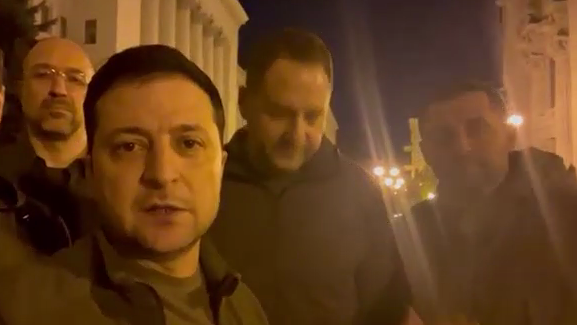 Ukrainian President Zelensky: The president and government officials are still in Kiev.
On the evening of February 25th, local time, Ukrainian President Zelensky posted a video on social networking sites. In the video, he said that the Ukrainian president and government officials are still in Kiev, and they will continue to guard their country here.
Russian Defense Ministry: Russian troops have blocked the Ukrainian cities of Samui and Konotop.
On February 25th, local time, the Russian Defense Ministry announced that Russian troops had blocked the Ukrainian cities of Koh Samui and Konotop.
Odessa, the fourth largest city in Ukraine, announced a curfew.
On February 25th, local time, Odessa, the fourth largest city in southern Ukraine, announced a curfew from 22: 00 to 5: 00 the next morning.
[February 25th]
Russian Presidential Press Secretary: Putin will send a delegation to Minsk to negotiate with Uzbekistan.
On February 25th, local time, Russian Presidential Press Secretary peskov said that Putin was going to send a Russian delegation to Minsk to negotiate with the Ukrainian delegation.
According to him, the Russian delegation will include representatives from the Ministry of National Defense, the Ministry of Foreign Affairs and the Kremlin, and Minsk has been chosen as the meeting place.
Peskov said that Belarusian President Lukashenko has indicated that he will create all necessary conditions for the negotiations between Russia and Ukraine.
Zelensky: The whole territory of Ukraine has fallen into war and hopes to negotiate with Putin.
On 25th local time, Ukrainian President Zelensky said in his latest video speech that Russia’s "invasion" of Ukraine was not only aggression, but also the beginning of the war in Europe. At the same time, he criticized the aid from European countries for being too slow.
Zelensky also said that the whole territory of Ukraine has fallen into war, and Ukraine hopes to negotiate with Russian President Vladimir Putin to avoid casualties.
Supreme leaderOn the phone with Russian President Vladimir Putin
The Supreme Leader of president telephoned Russian President Vladimir Putin on the afternoon of February 25th. The two sides exchanged views on the current situation in Ukraine.
Russia is willing to hold high-level negotiations with Uzbekistan.
The Supreme Leader pointed out that the situation in eastern Ukraine has changed dramatically recently, which has aroused great concern from the international community. China decides its position according to the merits of the Ukrainian issue itself. We should abandon the cold war mentality, pay attention to and respect the legitimate security concerns of all countries, and form a balanced, effective and sustainable European security mechanism through negotiations. China supports Russia and Ukraine to solve the problem through negotiations. China’s basic position on respecting the sovereignty and territorial integrity of all countries and observing the purposes and principles of the UN Charter is consistent. China is willing to work with all parties in the international community to advocate a common, comprehensive, cooperative and sustainable security concept and firmly safeguard the international system with the United Nations at the core and the international order based on international law.
The fighting began immediately, and the Ukrainian Ministry of National Defense urged residents in Oborong District of Kiev not to go out.
On the 25th local time, due to the approaching hostilities, the Ukrainian Ministry of Defence urged the residents of Oborong District of Kiev not to go out, and the fighting began immediately.
Russian troops destroyed 118 military infrastructures in Ukraine, and more than 150 Ukrainian soldiers surrendered.
On the 25th local time, Russian Defense Ministry spokesman Konashenkov said that Russian armed forces had destroyed 118 ground military infrastructures in Uzbekistan during special military operations.
Russian troops will transit Belarus and go south to Kiev, the capital of Ukraine.
On the 25th, local time, due to the damage to the runway of Gostomeli military airport in Kiev, Ukraine, Russian troops have decided to transit Gomel, Belarus, and go south to Kiev via Chernigov, Ukraine.
US media: Gunfire sounded near the government building in Kiev, the capital of Ukraine.
According to the Associated Press, gunshots rang out near the government building in Kiev, the capital of Ukraine.
Russian Defense Ministry: Eleven Russian military planes were shot down in military operations.
The Russian Ministry of Defence announced that 11 military aircraft were shot down during the military operation. According to Sputnik news agency & radio’s report on February 25th, the Russian Ministry of Defence announced that five combat planes, one helicopter and five unmanned aerial vehicles were shot down during military operations.
Russian armyTanks have arrived around Kiev, and Russia and Ukraine are fighting fiercely.
At about 6: 00 local time on the 25th, according to a reporter from the Central Radio and Television General Station, another explosion occurred in Kiev, the capital of Ukraine. Russian tanks have arrived around Kiev, and Ukrainian troops blew up a bridge near Kiev.
Many explosions occurred in Kiev, the capital of Ukraine.
In the early morning of 25th local time, there were many explosions in Kiev, the capital of Ukraine.
Ukrainian president orders the establishment of high command.
On 25th local time, Ukrainian President Zelensky signed a presidential decree, announcing the establishment of the Supreme Command, and related decrees were published on the official website of the President.
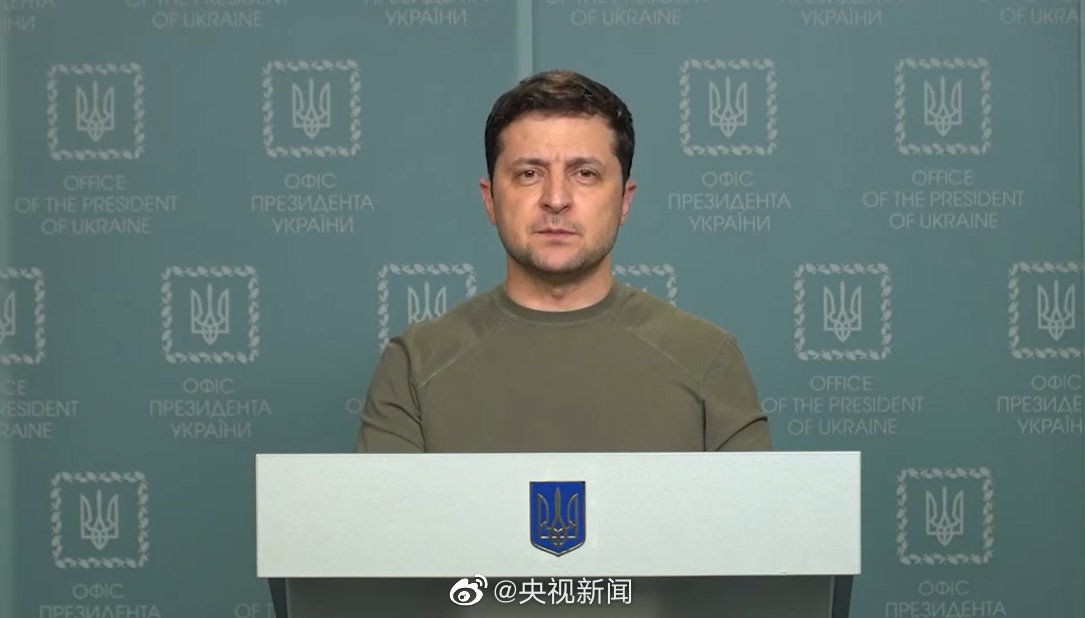 President Ukraine: The West has completely abandoned Ukraine.
On the 25th local time, Ukrainian President Zelensky delivered a video speech. He said that the West completely gave up Ukraine. "I asked the leaders of 27 European countries, will Ukraine join NATO? But everyone was scared, and no one answered me. We are not afraid to talk to Russia, and we are ready to talk about all issues, including the security and neutrality of our country. "
Zelensky: On the first day of Ukrainian military operations, 137 people were killed and 316 injured.
According to Agence France-Presse, Ukrainian President Zelensky said that on the first day of military operations, 137 people were killed and 316 others were injured. (@ China News Network)
China will take back China citizens in Ukraine by charter flights in batches.
Embassy of China in Ukraine: At present, the domestic situation in Ukraine has deteriorated sharply, and my citizens and Chinese-funded enterprises in Ukraine are at high security risks. In order to prepare for the batch charter flight to take back the relevant matters, the registration of personnel is now started. Take a charter flight on a voluntary basis. The dispatch time of charter flights is determined according to the flight safety situation, and will be notified in advance.
Ukrainian President Zelensky issued a nationalcall up all the forces to meet the urgencymake
On 24th local time, Ukrainian President Zelensky issued a presidential decree, announcing the national general mobilization for 90 days.
Russian troops destroyed 83 Ukrainian ground military facilities, and Russia proposed negotiation conditions.
Russian media quoted Russian Presidential Press Secretary peskov as saying that if the Ukrainian authorities are ready to discuss the issues raised by Moscow, including Ukraine’s neutral status and not deploying weapons in its territory, Moscow will be ready for dialogue with Kiev. "The key is whether the Ukrainian leadership is ready for negotiations.". According to peskov, Russia’s goal is to "demilitarize" Ukraine, because it poses a threat to Russian security.
Biden announced four severe sanctions against Russia, saying that he would freeze all Russian assets in the United States.
On the 25th local time, US President Biden announced four new sanctions against Russia, saying that all Russian assets in the United States would be frozen.
[February 24]
The Ukrainian president announced that he had broken diplomatic relations with Russia.
On the 24th local time, Ukrainian President Zelensky announced that Ukraine had broken diplomatic relations with Russia.
Russian Ministry of Defence: A large number of Ukrainian soldiers laid down their weapons and abandoned their positions.
On the 24th local time, the Russian Defense Ministry said that a large number of Ukrainian soldiers laid down their weapons and abandoned their positions. The Russian Defense Ministry said that it would not attack positions that laid down their weapons.
The Russian Defense Ministry retorted that the news that the plane was shot down was inconsistent with the facts.
On the 24th local time, the Ukrainian military said that Ukrainian air defense forces shot down a Russian plane in eastern Ukraine. The Russian Defense Ministry subsequently stated that foreign media reports that a Russian plane was shot down in Uzbekistan were inconsistent with the facts.
The Ukrainian parliament passed the decision to enter a wartime state throughout Ukraine.
On the 24th, local time, the Verkhovna Rada (Parliament) of Ukraine passed the decision to enter a wartime state throughout Ukraine.
The capital Kiev subway is open for free, and the subway station will be used as a bomb shelter. (Reporter Wang Delu, General Desk)
Russian Ministry of Defence: The air defense forces of the Ukrainian armed forces have been completely suppressed.
On the 24th local time, the Russian Defense Ministry said that Ukrainian border guards did not resist Russian troops. At present, the military infrastructure of the air force of the Ukrainian armed forces has been paralyzed, and the air defense forces of the Ukrainian armed forces have been completely suppressed.
The headquarters of the Ukrainian National Guard was destroyed.
On the 24th local time, according to the Ministry of Emergency Situations of Ukraine, the headquarters of the Ukrainian National Guard was destroyed.
Embassy of China in Ukraine: Please pay great attention to safety for citizens in China.
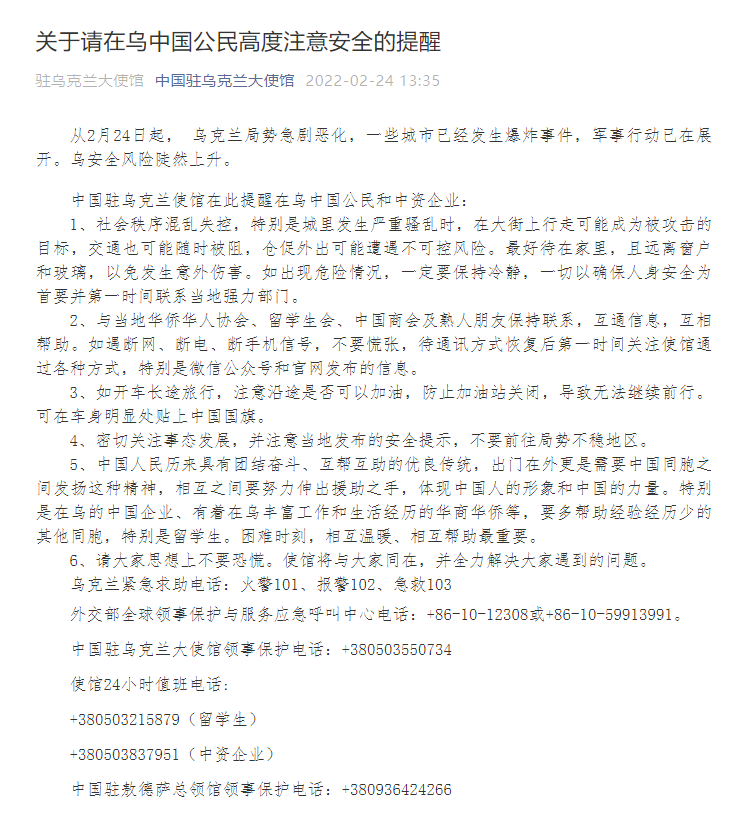 Ukrainian border service: Belarusian armed forces provide support to the Russian army.
On the 24th local time, the Ukrainian Border Service said that the Belarusian armed forces provided support to the Russian army.
President of Ukraine: All military forces and special forces have been mobilized.
On 24th, local time, Ukrainian President Zelensky said that the National Security and Defense Committee of Ukraine has entered a state of emergency and mobilized all military forces and special forces.
President of Ukraine: The whole territory will enter a state of war.
On 24th local time, Ukrainian President Zelensky said that the whole territory of Ukraine will enter a state of war.
Russian troops have broken through the boundary of Kharkov State.
On February 24, local time, the Russian army has broken through the boundary of Kharkov State. The Ukrainian army command posts in Kiev and Kharkov were attacked by rockets.
Ukraine has announced the closure of its national airspace.
On February 24th, local time, Ukrainian authorities announced the closure of national airspace. Earlier, the Russian aviation administration had informed civil aviation companies that the airspace in the border area with Ukraine had been closed.
Russian and Belarusian Presidents Talk on Regional Situation
At 5 am local time on 24th, Russian President Vladimir Putin had a telephone conversation with Belarusian President Lukashenko. Putin briefed the other side on the situation in the border areas between Russia and Ukraine and in Donbass.
An explosion occurred near the Ukrainian capital.
At 5 o’clock local time on February 24, explosions were heard in Kiev, the capital of Ukraine, and cities such as Odessa, Kharkov, Kramatorsk and Berdyansk.
According to local media reports, many places in Ukraine have been attacked from the eastern region. At present, civilian armed forces in eastern Ukraine have not responded to the report.
Ukraine imposed a 30-day state of emergency from 0: 00 on the 24th.
On February 23rd, the Ukrainian Parliament voted to implement a 30-day state of emergency throughout the country (except Donetsk and Lugansk) from 0: 00 local time on the 24th.According to relevant laws, the duration of the state of emergency is 30 to 60 days. If necessary, the President may extend the state of emergency for no more than 30 days.
The EU initiated political and financial sanctions against Russia and imposed economic sanctions on eastern Ukraine.
According to the announcement issued by the Council of the European Union on the same day, the European Union listed 351 members of the Russian State Duma who voted for the recognition of the "Donetsk People’s Republic" and the "Lugansk People’s Republic" as sanctions targets, and listed 27 individuals and entities such as Russian government officials, senior military personnel, businessmen and banks as sanctions targets, prohibiting them from entering the European Union and freezing their property within the jurisdiction of the European Union.
[February 23]
The United Nations General Assembly held a meeting on the situation in Ukraine.
The United Nations General Assembly held a plenary session on "the situation in the temporarily occupied territory of Ukraine". UN General Assembly President Shahid, Secretary General Guterres and representatives from nearly 80 countries spoke at the meeting.
American naval, land and air forces are gathering around Ukraine.
With the increasing tension in Ukraine, the United States urgently deployed advanced fighter planes and helicopter gunships to the area near Russia on the east wing of NATO. In addition, US and Russian ships have also carried out large-scale sea assembly in the Black Sea and the Mediterranean Sea. A game of land, sea and air forces around Ukraine is unfolding.
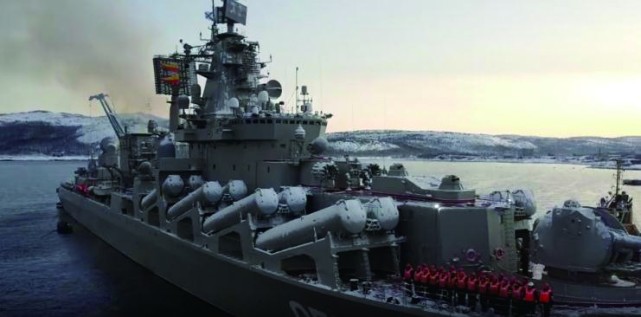 The White House confirmed that the meeting between US President Biden and Russian President Vladimir Putin was cancelled.
On February 22, local time, a White House spokesman said that the meeting between US President Biden and Russian President Vladimir Putin has been confirmed to be cancelled.
Russia announced the establishment of diplomatic relations at ambassadorial level with the two "Republics" in eastern Ukraine.
On the 22nd local time, the Russian Foreign Ministry announced that Russia will establish diplomatic relations at ambassadorial level with the People’s Republic of Donetsk and the People’s Republic of Lugansk from now on.
The upper house of the Russian parliament approved the president to use armed forces abroad.
Russian President Vladimir Putin signed a decree on the 22nd to ratify the treaty of friendship, cooperation and mutual assistance between Russia and the "Donetsk People’s Republic" and "Lugansk People’s Republic" in eastern Ukraine. On the same day, the Council of the Russian Federation (the upper house of parliament) passed a resolution allowing the Russian President to use the armed forces of the Russian Federation abroad.
[February 22]
The latest statement of the Ministry of Foreign Affairs on the situation in Ukraine: once again call on all parties to exercise restraint and ease the situation through dialogue and negotiation.
On February 22nd, Foreign Ministry Spokesperson Wang Wenbin held a regular press conference and a reporter asked questions about the current situation in Ukraine. Wang Wenbin said that the Ukrainian issue has complicated historical latitude and longitude and realistic factors, and China’s position in Ukraine is consistent and clear, and has not changed. China advocates the peaceful settlement of disputes in accordance with the principles of the UN Charter, and calls on all parties concerned to exercise restraint, resolve their differences through negotiations and avoid further escalation of the situation.
Wang Yi telephoned Blinken at the request.
On February 22nd, State Councilor and Foreign Minister Wang Yi telephoned US Secretary of State Blinken at the invitation to exchange views on the Ukrainian and Korean Peninsula nuclear issues.
China calls for peaceful settlement of disputes.
Zhang Jun said that China pays close attention to the latest development of the Ukrainian situation. China has comprehensively expounded its position at the first two meetings of the Security Council. Under the current situation, all parties concerned should exercise restraint and avoid any actions that may aggravate tensions. We welcome and encourage all efforts to promote diplomatic settlement, and call on all parties concerned to continue dialogue and consultation and seek reasonable solutions to each other’s concerns on the basis of equality and mutual respect.
Zhang Jun said that the current situation in Ukraine is the result of a series of complicated factors. China has always decided its position according to the merits of the matter itself, and advocates that all countries should settle international disputes peacefully in accordance with the purposes and principles of the UN Charter.
The United Nations Security Council held a Ukrainian meeting, and Uzbekistan asked the Security Council to take action.
Keszli, Permanent Representative of Ukraine to the United Nations, said that Ukraine hopes for peace and will continue to take action. I hope that all parties can provide quick support and are also committed to political and diplomatic solutions. The Ukrainian delegation asked the members of the Security Council to exercise their responsibilities and also asked Russia to cancel its decision and return to the negotiating table.
The United Nations Security Council held a meeting in Ukraine, saying that more actions will be taken against Russia tomorrow.
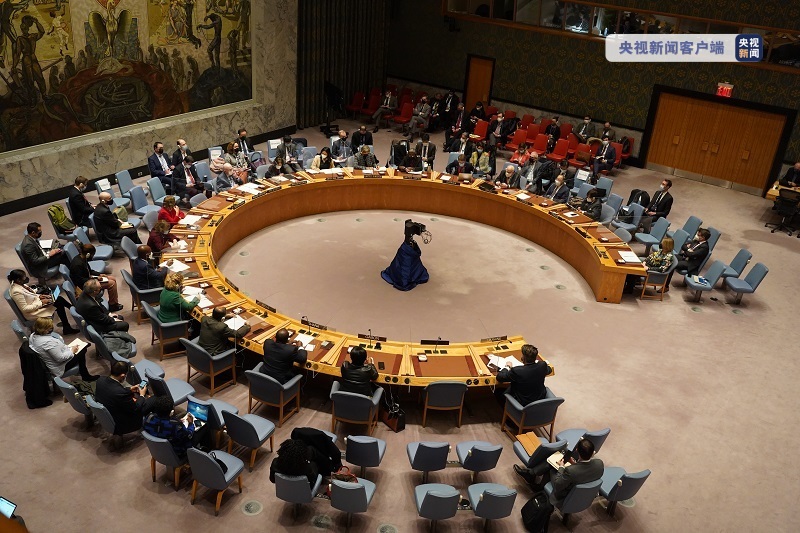 △ The UN Security Council held an emergency meeting on the situation in Ukraine
At 21: 00 local time in new york on February 21st (10: 00 Beijing time on February 22nd), the UN Security Council held an emergency meeting on the situation in Ukraine.
The Ukrainian President delivered a televised speech: Ukraine will reserve the right to conduct independent and collective defense.
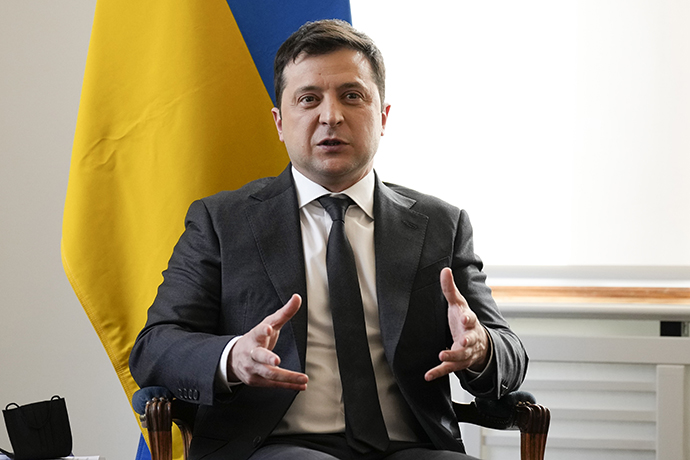 On the 22nd local time, Ukrainian President Zelensky delivered a speech on live television, saying that Ukraine would reserve the right to defend itself individually and collectively.
In his speech, Zelensky also called for the emergency convening of the Normandy model four-nation summit and the special meeting of the OSCE to discuss the Russian recognition of the independence of the People’s Republic of Donetsk and the People’s Republic of Lugansk.
Ukrainian President Zelensky delivered a speech: Ukraine’s border remains unchanged.
 Ukrainian President Zelensky said in a speech in the early hours of 22nd local time that although Russian President Vladimir Putin decided to recognize the "independence" of "Donetsk People’s Republic" and "Lugansk People’s Republic", Ukraine’s internationally recognized borders will remain unchanged.
Foreign media: Tank columns appeared in Donetsk, Wudong region.
According to a report by Reuters on the 22nd, witnesses saw a column of military vehicles, including tanks, in the suburb of Donetsk controlled by Udong armed forces that morning.
Ukraine continues to crack down on Donetsk residential area on a large scale, and civilians are injured.
On the 22nd local time, the police of "Donetsk People’s Republic" said that the Ukrainian side continued to carry out large-scale attacks on residential areas in this area, causing one civilian to be injured.
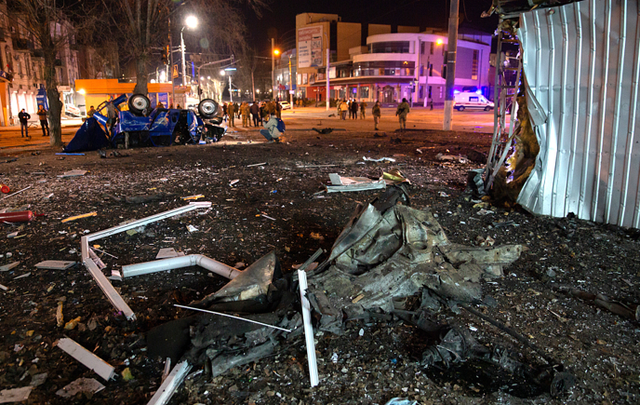 Russian media: It is reported that Russian troops have arrived in Donbass area.
It is reported that Russian troops have begun to arrive in Donbass, and the Interfax news agency quoted witnesses as saying that two armored convoys are already in the "Donetsk Republic" and are heading north and west.
[February 21st]
The White House urged Ukrainian President Zelensky to travel to western Ukraine to protect his own safety.
The United States urged Ukrainian President Zelensky to travel to Lviv in western Ukraine to protect his own safety.
Biden’s government ordered the transfer of American diplomats in Ukraine to Poland.
For security reasons, the Biden administration is ordering the transfer of American diplomats, including embassy staff, who remain in Ukraine to Poland.
White House: Biden has informed Ukrainian President Zelensky of the plan to sanction Russia.
The White House said that U.S. President Biden had informed Ukrainian President Zelensky of his plan to sanction Russia and promised to respond quickly and resolutely.
The UN Security Council will hold a public meeting on the situation in Ukraine.
At 21: 00 local time on the 21st (10: 00 Beijing time on the 22nd), the UN Security Council will hold a meeting on the situation in Ukraine. Dicarlo, Under-Secretary-General of the United Nations Department of Political Affairs, will attend the meeting.
Russia, which currently holds the rotating presidency of the Security Council, accepted the request of the United States and changed the meeting from a closed meeting to an open meeting. This emergency meeting of the Security Council was proposed by Ukraine, and Ukraine will participate in this emergency meeting of the Security Council.
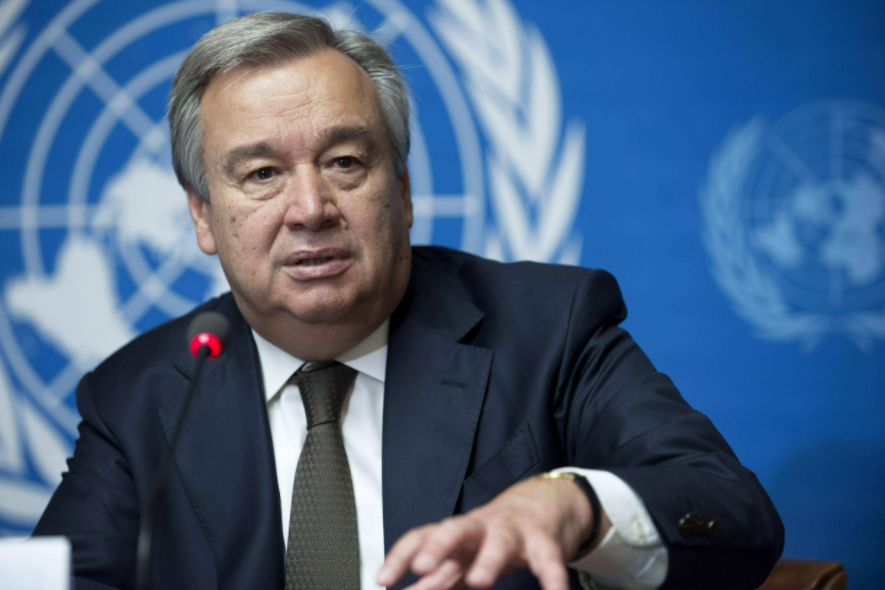 United Nations: reaffirming respect for Ukraine’s sovereign independence and territorial integrity
The United Nations calls on all parties concerned to refrain from unilateral actions, which will undermine Ukraine’s territorial integrity and will also affect the implementation of the new Minsk Agreement on the status of Donetsk and Lugansk supported by the Security Council.
On February 21st, local time, UN Secretary-General Guterres issued a written statement on the current situation in eastern Ukraine through a spokesman. In the statement, Guterres expressed his deep concern about Russia’s decision on the identification of Donetsk and Lugansk regions, and called on all parties to peacefully resolve the conflict in eastern Ukraine in accordance with the new Minsk Agreement endorsed by Security Council resolution 2202 in 2015.
EU: Sanctions will be taken against Russian personnel involved in recognizing the independence of Donbass region.
On the evening of February 21st, local time, European Council President Michel and European Commission President Ursula von der Leyen issued a statement saying that they "condemned in the strongest terms the Russian President’s decision to recognize Donetsk and Lugansk as independent entities". At the same time, the EU said that it would take sanctions against those who participated in "this illegal act".
The United States and its allies asked the Security Council to hold an emergency meeting on Ukraine.
The United States and its allies requested the Security Council to hold an emergency meeting on Ukraine on the evening of 21st local time.
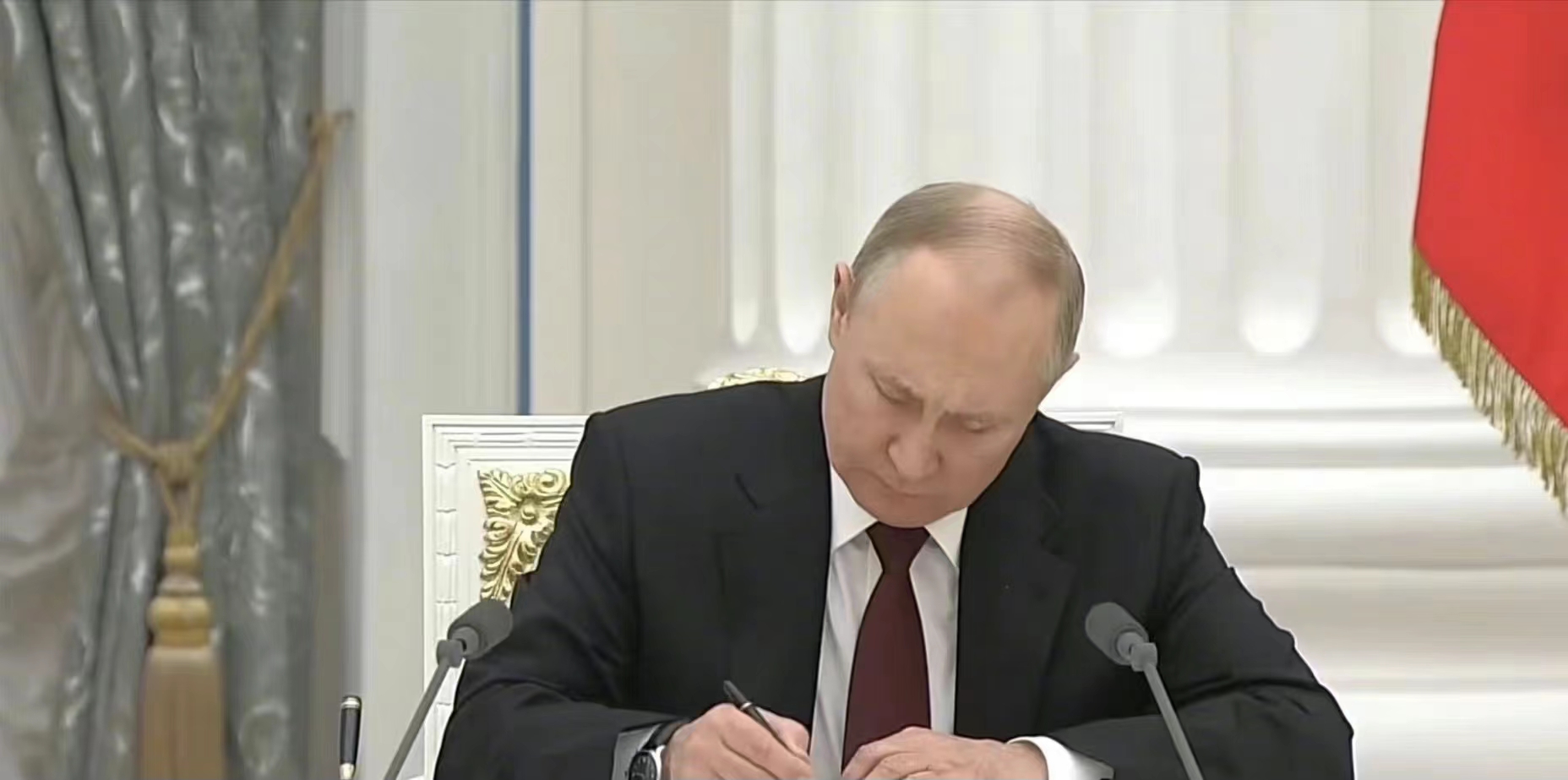 Putin announced the recognition of Donetsk and Lugansk as independent countries.
On February 21, local time, Russian President Vladimir Putin delivered a national video speech, announcing the recognition of the Donetsk People’s Republic and the Lugansk People’s Republic, which are self-proclaimed by Wudong civilian armed forces, as independent countries. On the same day, Russian President Vladimir Putin signed a presidential decree recognizing the People’s Republic of Donetsk and the People’s Republic of Lugansk, and signed a treaty of friendship, cooperation and mutual assistance between Russia and the People’s Republic of Donetsk and Lugansk.
[February 20th]
British Prime Minister Johnson: Russia is planning "the biggest war in Europe since 1945"
Russian media: More than 53,000 residents in eastern Ukraine have entered Russia.
On the 20th local time, Russian Minister of Emergency Situations ChuPrijan said that more than 53,000 residents in eastern Ukraine had crossed the border and entered Russian territory. By 19: 00 on the same day, more than 53,000 residents in Donetsk and Luhansk regions in eastern Ukraine had crossed the Russian border and were transported by 142 buses to 101 temporary resettlement sites.
 Residents of eastern Ukraine fled their homes and went to Russia.
[February 18th]
The United States asked Russia to make a statement that it would not invade Ukraine.
On February 17th, local time, US Secretary of State Blinken asked Russia to make a clear statement that it would not invade Ukraine at the meeting of the UN Security Council on the Ukrainian crisis, and supported this statement by withdrawing troops.
Sergei Vershinin, Russian Deputy Foreign Minister, said that Blinken’s statement of "invasion" was dangerous, and Russian troops had withdrawn from the border after the military exercise. "It is futile and groundless to try to shift the responsibility to Russia," Vershinin said. "This is a transfer of responsibility for Ukraine."
British Ministry of Defence announces Russian operational plan
The British Ministry of Defence announced the possible operational routes for the Russian army to "invade" Ukraine. The road map shows that the Russian army is expected to launch an "attack" in two stages, and the Russian army stationed in Belarus will "directly attack" the Ukrainian capital with Russian soldiers in the west.
[February 17th]
President Uzbekistan: I am ready to hold any kind of talks with Russia to establish peace.
On February 17th, local time, Ukrainian President Zelensky said that Ukraine was ready to hold any kind of talks with Russia to establish peace. Although the Russian side has made a public statement, it has not yet shown its readiness for real dialogue.
[February 16th]
Russia says Russian troops have begun to withdraw from the Russian-Ukrainian border.
As for Moscow’s announcement that Russian troops began to withdraw from the border areas near Ukraine after military exercises, according to "Russia Today" (RT), US President Biden responded to this on the 15th local time, claiming that the US side "has not verified" this information.
[February 15th]
Russia is willing to continue talks with the West on the situation in Ukraine.
Dmitry Peskov, Russian Presidential Press Secretary, said that Russian President Vladimir Putin is willing to continue the dialogue with the West on the security guarantee that Russia seeks and the Ukrainian issue.
[February 13th]
Ukrainian Prime Minister: Is it necessary to pass on evidence from Russia?
Vladimir Zelensky, President of Ukraine, said that there are too many claims that Russia may "invade" Ukraine, and those who want to spread such news should give conclusive evidence.
 On January 19th, Ukrainian President Zelensky (left) met with US Secretary of State Blinken in Kiev. Xinhua News Agency, courtesy of the Ukrainian President’s Office.
[February 10th]
Russian Deputy Foreign Minister: The United States pressured Russia with military assistance to Ukraine.
The Russian Deputy Foreign Minister said that from the point of view that the United States actively transported military equipment, including deadly weapons, to Ukraine, everything that happened in the region was an attempt by the United States to exert additional political and military pressure on Russia.
[February 9]
Macron rushed to Moscow to mediate, Russia: Don’t expect too much.
On February 7th and 8th, French President Macron visited Russia and Ukraine successively, and held talks with Russian President Vladimir Putin and Ukrainian President Zelensky.
During his visit to Ukraine, Macron said that Putin "promised" that Russia would not further escalate the Ukrainian crisis. However, the Russian side pointed out that France is not the leader of NATO and Russia will not reach an agreement with France. At the same time, Putin also indicated that it is possible for Russia to downgrade the conflict according to some proposals put forward by Macron.
[February 8]
Putin sternly warned: If Ukraine joins NATO, Russia will probably go to war with Europe.
On February 7, local time, Putin and Macron held a joint press conference after discussing the situation in Russia and Ukraine. Putin said that if Ukraine joins NATO, its attempt to recapture Crimea may trigger a war between Russia and European countries.
Putin: There will be no winners in the conflict between Russia and NATO.
Russian President Vladimir Putin said in Moscow on the 7th that Russia resolutely opposes NATO’s eastward expansion, which will pose a threat to Russia. He doesn’t want the situation to develop further, which will lead to a conflict between Russia and NATO. There will be no winners in this conflict.